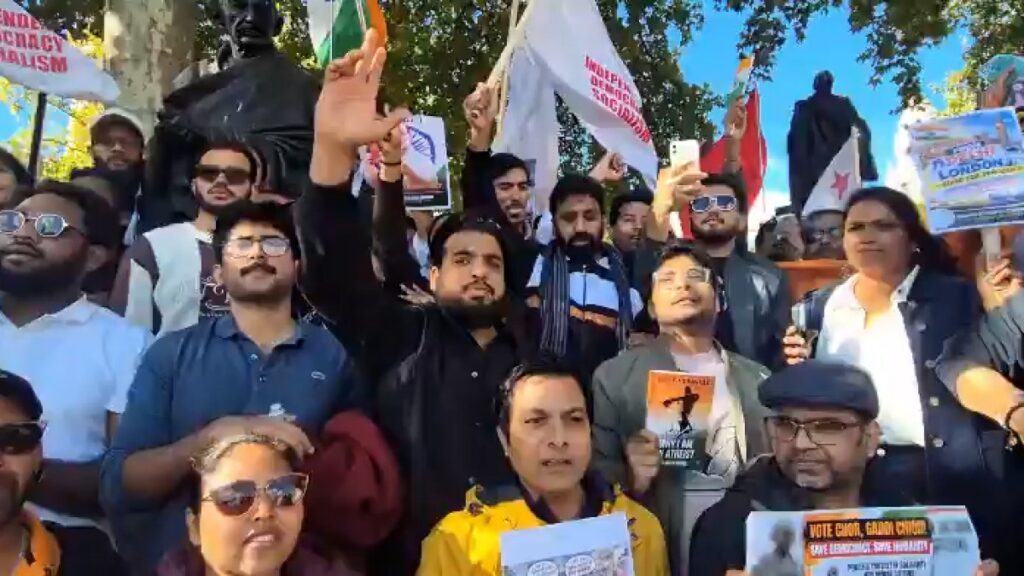
Dhruv Rathee, a popular Indian YouTuber known for his socio-political commentary, recently led a significant protest in London under the banner of ‘Stop Vote Theft.’ The protest was aimed at drawing international attention to what Rathee and several other activists allege is electoral manipulation by Prime Minister Narendra Modi’s government in India.
The protest saw a gathering of Indians and supporters of democratic integrity who voiced their concerns about the transparency and fairness of the electoral processes conducted by the current regime. Demonstrators held placards and chanted slogans demanding accountability and reforms in the Indian electoral system.
Rathee’s involvement in this protest underscores his rising influence beyond YouTube, taking an active role in political activism. His allegations of vote theft refer to claims that certain electoral outcomes have been manipulated through questionable means, undermining the democratic fabric of India.
Critics of the Modi government argue that various tactics have been employed to suppress opposition votes and manipulate election results in favor of the ruling Bharatiya Janata Party (BJP). This includes accusations of voter intimidation, misinformation campaigns, and manipulation of electronic voting machines.
Supporters of Rathee commend his courage to speak out on an international platform and to expose practices they believe threaten the democratic process. However, supporters of the BJP dismiss these accusations as baseless and politically motivated efforts to tarnish the image of the government.
The protest in London reflects a growing diaspora concern about the political developments in India, with many expatriates actively engaging in dialogue and activism to promote democratic values. Rathee’s leadership in this event has sparked discussions about the role of social media influencers in mobilizing political movements globally.
As the controversy unfolds, the Modi government has yet to issue a detailed response addressing these allegations of vote theft. The situation highlights the complexities and challenges faced by democratic institutions in India and the importance of vigilant civil society participation to ensure free and fair elections.
This event adds to the ongoing debate about electoral integrity in India and the responsibilities of digital platforms and activists in shaping public opinion and policy. The protest in London is a significant marker of the global dimension of Indian politics and the active engagement of its diaspora community in crucial national issues.