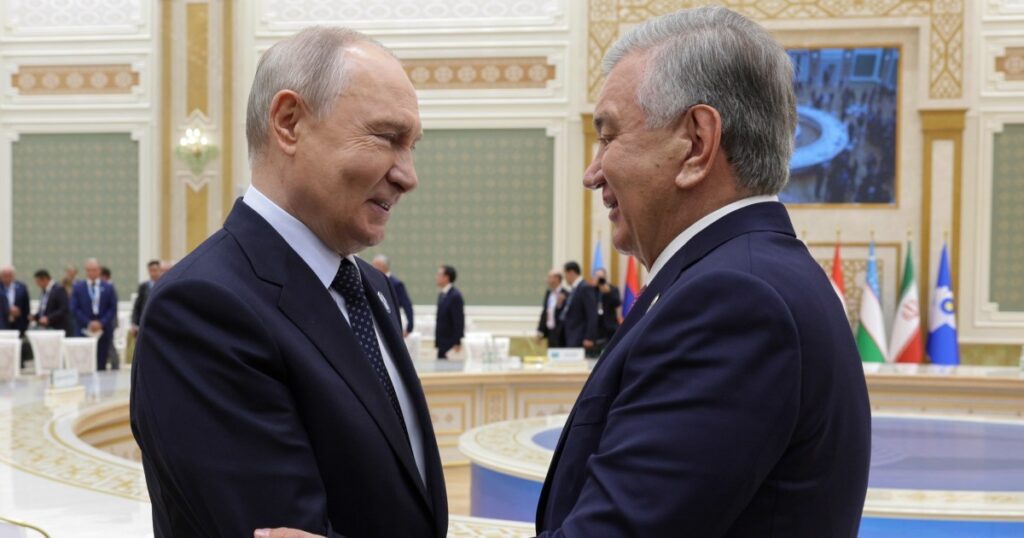
Senator Marco Rubio’s recent trip to Uzbekistan underscores the increasing importance of Central Asia as a geopolitical arena where countries are actively diversifying their international partnerships. Central Asian states, traditionally influenced by Russia and China, are now seeking to broaden their diplomatic and economic ties to include the United States, Europe, and other global players.
Uzbekistan, the most populous country in Central Asia, has been at the forefront of this strategy, positioning itself as a key regional hub. Rubio’s visit symbolizes Washington’s renewed interest in the region amid rising concerns about Beijing and Moscow expanding their influence.
The trip followed a pattern of pragmatic engagement from the U.S., focusing on transactional and interest-based collaborations rather than ideological commitments. Such an approach appears tailored to address the specific needs of Central Asian governments, including economic development, security cooperation, and infrastructure investment.
Central Asia’s strategic location—bordering major powers and serving as a gateway between Europe and Asia—makes it a valuable partner in areas like energy transit, counterterrorism, and digital connectivity. Rubio’s meetings with Uzbek officials likely centered on strengthening these sectors, highlighting opportunities for America to play a role in regional stability.
However, the contest for influence is keenly felt. China’s Belt and Road Initiative has already secured significant footholds through infrastructure projects. Russia continues to maintain a security presence through alliances like the Collective Security Treaty Organization. The United States faces the challenge of differentiating its engagement and offering attractive alternatives.
Critics of Washington’s historically sporadic involvement argue that a more consistent and nuanced strategy is required to regain traction in Central Asia. Rubio’s visit signals an attempt to revive a transactional diplomacy style that aligns American interests with the region’s evolving priorities, but whether this will translate into long-term influence remains to be seen.
The pragmatic nature of the U.S. approach—characterized by flexible partnerships, economic pragmatism, and limited ideological conditions—may resonate better with Central Asian leaders wary of over-commitment. This realism could enable the U.S. to secure footholds in a region where influence is increasingly contingent on tangible benefits.
As Central Asian nations continue to navigate complex relationships with multiple major powers, the United States’ challenge will be to craft a compelling value proposition that goes beyond rhetoric. It must leverage its technological expertise, promote regional connectivity, and offer security collaboration that respects the sovereignty and diverse interests of these states.
In conclusion, Rubio’s Uzbekistan trip is emblematic of Central Asia’s pursuit of diversified partnerships as it seeks to balance competing influences. The United States, by adopting a pragmatic and transactional engagement model, has an opportunity to reassert itself in the region. Success will depend on Washington’s ability to translate diplomatic gestures into sustained policies that deliver measurable benefits to Central Asian countries, ensuring that the U.S. can remain a relevant and influential actor in this strategically crucial part of the world.