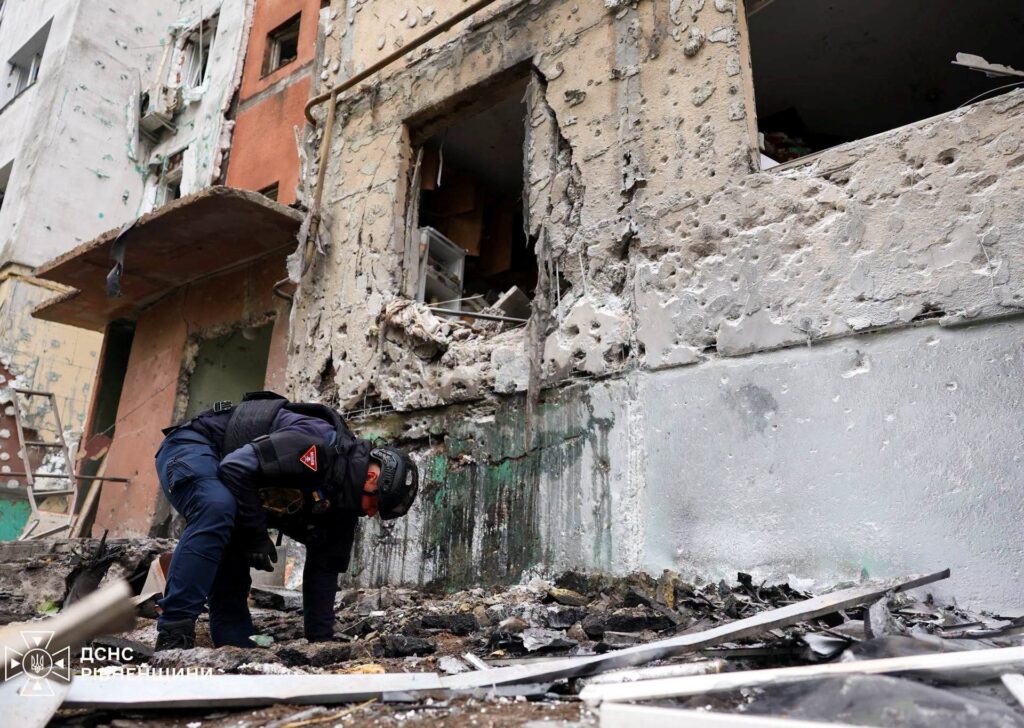
In a relentless campaign targeting Ukraine’s critical infrastructure, Russian forces have intensified their attacks, leading to significant casualties and widespread power outages. At least eight people have been confirmed dead following a series of missile strikes on key Ukrainian cities including Kharkiv, Kramatorsk, Volyn, and Rivne.
These attacks form part of a broader strategic effort by Moscow to cripple Ukraine’s power grid, exacerbating the challenges faced by civilians and complicating military and humanitarian operations. The assaults have reportedly left around one million people without electricity, severely disrupting daily life and essential services across multiple regions.
Kharkiv, Ukraine’s second-largest city and a frequent target of Russian bombardments, has experienced severe damage to its power infrastructure. The loss of electricity has had cascading effects, including limited heating during cold weather, disrupted communications, and impaired healthcare facilities trying to cope with the influx of casualties.
Similarly, Kramatorsk, located in the Donetsk region, has faced concentrated attacks that damaged vital utility installations. This city plays an important role in Ukraine’s eastern defense and recovery efforts, and the destruction of its infrastructure poses significant challenges to the region’s stability.
In the Volyn and Rivne regions in western Ukraine, the attacks have raised alarm due to the traditionally lower level of conflict activity there. The strikes suggest a widening of the conflict zone and demonstrate the strategic depth of Russia’s campaign.
Ukrainian officials have condemned the attacks, highlighting the deliberate targeting of civilian infrastructure as a violation of international law. They warn that continuing assaults on the power grid jeopardize the well-being of millions of people and hinder efforts to provide humanitarian aid.
International responses have included expressions of solidarity and calls for stronger sanctions against Russia to deter these attacks. Humanitarian organizations have also stepped up efforts to deliver emergency assistance and restore essential services.
The campaign against Ukraine’s power grid reflects an evolving form of warfare where infrastructure sabotage aims to weaken the opponent’s capacity to resist. Experts note that restoring power and rebuilding damaged facilities will require substantial resources and time, further straining Ukraine’s resilience.
As the conflict continues, it remains critical for global actors to support Ukraine not only militarily but also in addressing the humanitarian consequences of these attacks. The targeting of power infrastructure underscores the broader humanitarian crisis unfolding and the urgent need for diplomatic efforts to halt hostilities.
This latest wave of violence serves as a harsh reminder of the war’s impact on civilian populations and the complexity of the ongoing conflict in Ukraine. It also highlights the critical importance of protecting essential infrastructure during armed conflicts to prevent widespread suffering and long-term damage to societies.