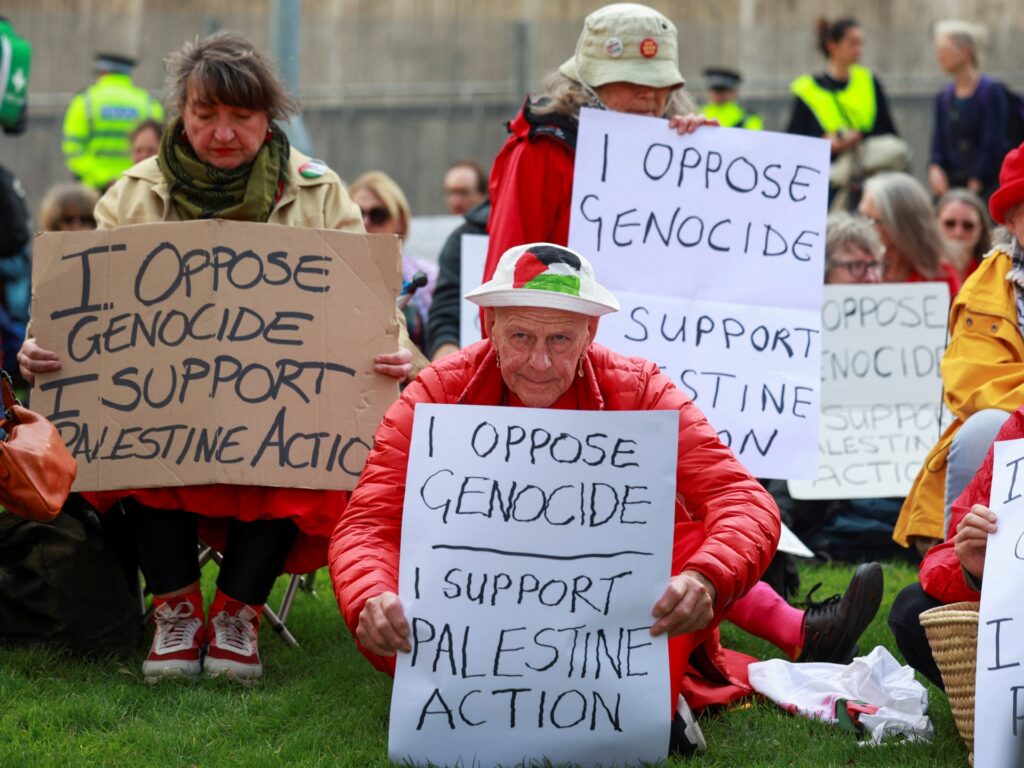
Sarah Helm, the wife of Jonathan Powell, the National Security Adviser to the UK Prime Minister, has publicly expressed her support for Palestine Action. This development has drawn significant attention, as the police are currently reviewing a social media post made by Helm concerning the activist group.
Palestine Action is known for its direct action campaigns advocating for Palestinian rights, often through protests and demonstrations aimed at entities involved in the Israeli-Palestinian conflict. Helm’s endorsement comes at a sensitive time, provoking discussions about the intersection of personal views and political responsibilities within government circles.
Jonathan Powell’s role as National Security Adviser involves handling delicate national and international security issues. His wife’s public stance on such a contentious subject could raise questions about impartiality and influence within the government.
Authorities have announced that they are reviewing the social media content in question to assess whether any actions or statements made by Helm warrant further investigation. The police’s involvement underscores the seriousness with which they are treating the situation, reflecting the complexities surrounding freedom of speech and national security.
Helm, who is also a writer, has maintained a relatively low public profile until this recent expression of support. Her post supporting Palestine Action has been widely circulated and debated on various social media platforms, highlighting the polarized public opinion on the matter.
The Prime Minister’s office has yet to issue an official statement regarding the incident. However, insiders suggest that the government is closely monitoring the situation to manage any potential diplomatic repercussions.
This event sheds light on the broader issue of political advisers and their families’ roles in public discourse, especially when it involves contentious international conflicts. It raises important questions about how personal beliefs intersect with professional obligations and the possible impact on governmental policies.
Meanwhile, Palestine Action continues its campaigns, drawing attention to the Israeli-Palestinian conflict through a range of activities. Supporters argue their actions bring necessary awareness and pressure, while critics view them as provocative and potentially disruptive.
As the police review proceeds, the incident has sparked a wider debate about the limits of expression for individuals connected to high-ranking government officials. The fine line between personal opinion and public responsibility is once again under scrutiny.
In conclusion, Sarah Helm’s public support for Palestine Action has ignited discussions on the intersection of personal beliefs, political influence, and national security within the UK government. How this will affect Jonathan Powell’s position and the broader political landscape remains to be seen as the situation develops.