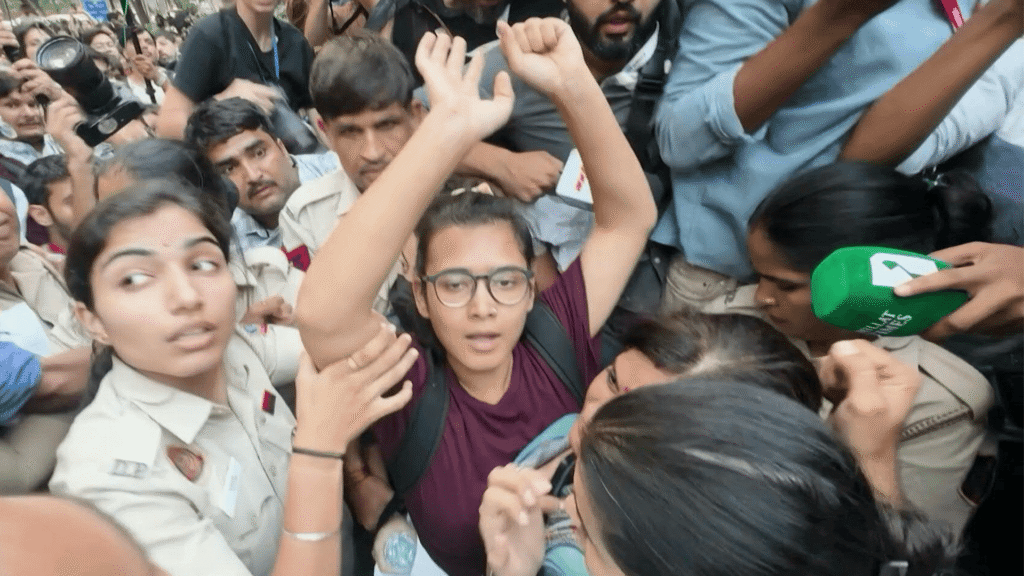
In a significant development in New Delhi, Indian protest leaders Abhijeet Dipke, founder of the Cockroach Janta Party, and student leader Neha Bora were detained ahead of a planned flag march. This action highlights the growing tensions and government measures in response to upcoming protests.
Abhijeet Dipke, known for his role in mobilizing mass protests through the Cockroach Janta Party, and Neha Bora, a prominent student leader actively involved in political activism, were taken into custody by authorities. Their detention came just hours before the scheduled flag march, an event intended to showcase solidarity among protest groups.
The flag march was expected to attract a large number of participants advocating for various social and political causes. However, the preemptive detention of these key figures indicates the government’s concerns over maintaining public order and preventing potential unrest.
Supporters of Dipke and Bora have expressed outrage over the arrests, condemning the move as an attempt to silence dissent and curb freedom of expression. Human rights organizations have also criticized the detentions, calling for the immediate release of the protest leaders and urging authorities to uphold democratic rights.
The government, meanwhile, has stated that the detentions were necessary to ensure peace and prevent any violent incidents during the march. Officials emphasized their commitment to respecting democratic processes while balancing the need for security in the capital.
This incident underscores the ongoing challenges in India concerning political protests, freedom of assembly, and state responses. As the situation unfolds, attention remains on the Indian authorities’ handling of the protest and the broader implications for civil liberties in the country.
Observers note that the detainment of prominent protest leaders ahead of significant demonstrations is not uncommon in India, reflecting a cautious approach by the government in managing dissent. The immediate reactions from the public and political entities suggest potential escalations or negotiations in the coming days.
The New Delhi police have increased security measures around the planned protest sites, and additional detentions have not been ruled out. The situation remains fluid as both protest organizers and law enforcement prepare for the next steps.
This recent development adds to the narrative of India’s complex political landscape, where protests play a vital role in shaping public discourse, yet often face stringent controls from the state.
As the flag march approaches, all eyes will be on New Delhi to see how the balance between protest rights and law enforcement will be maintained in this pivotal moment for India’s democracy.