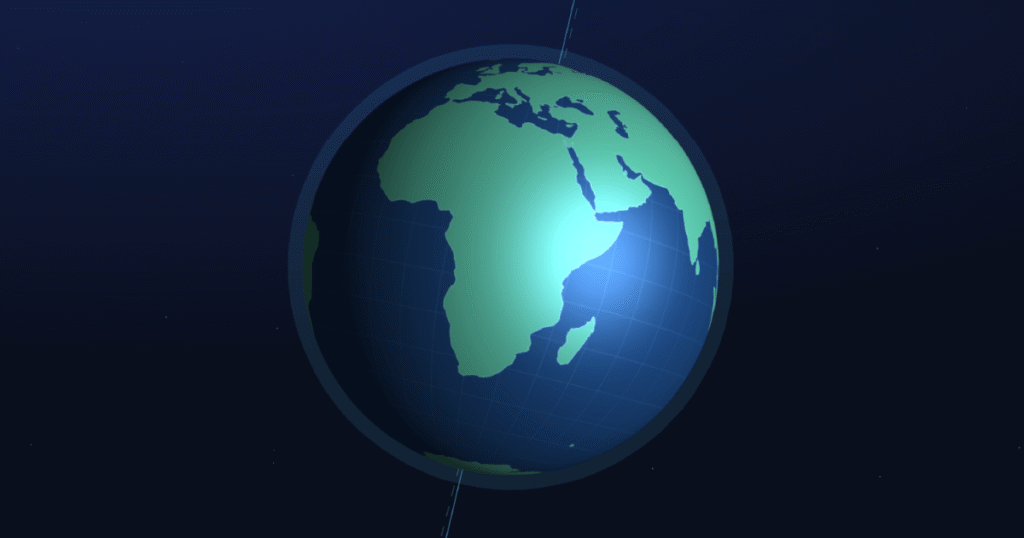
For decades, leap seconds have played an unsung but crucial role in synchronizing our clocks with the Earth’s rotation. As the planet’s rotation gradually slows and varies due to natural phenomena, timekeepers insert an extra second — a leap second — to ensure that atomic time, which runs with impeccable consistency, remains aligned with solar time, based on the Earth’s spin. This process typically happens roughly every 18 months but can vary, depending on Earth’s subtle motion changes.
However, this long-standing practice may be on the brink of a significant transformation, raising questions about the very nature of how humanity measures time.
Why Do We Need Leap Seconds?
The Earth’s rotation is not perfectly uniform. It is influenced by factors such as tidal forces, earthquakes, and atmospheric conditions, which cause slight but measurable fluctuations. Since 1967, the international standard for measuring time, Coordinated Universal Time (UTC), has relied on highly precise atomic clocks. These clocks do not slow down or speed up and measure time by counting vibrations of cesium atoms.
If we relied solely on atomic time, our clocks would slowly drift away from solar time because the Earth’s rotation loses or gains milliseconds here and there. Leap seconds are added to bring UTC back into line with the mean solar time. Without them, noon on a clock could eventually drift far from the time when the sun is highest in the sky.
The Challenges with Leap Seconds
Despite their necessity, leap seconds introduce complexity. Implementing a leap second means that on one particular day at a specific time (usually at midnight UTC on June 30 or December 31), the clock ticks 61 seconds instead of the usual 60. This anomaly creates challenges for computer systems, telecommunications networks, and navigation platforms which rely on precise timekeeping.
For example, some software systems may not be designed to handle a 61-second minute, leading to crashes, data errors, or synchronization issues. These risks become more critical as industries become increasingly dependent on flawless timing for financial transactions, satellite operations, and global communications.
Proposed Changes and Ongoing Discussions
Given these challenges, the International Telecommunication Union (ITU) and other global timekeeping bodies have been debating whether to discontinue leap seconds. The proposed alternatives include abandoning leap seconds altogether and allowing atomic time and solar time to slowly diverge, or replacing leap seconds with a more predictable ‘leap minute’ or longer adjustments occurring less frequently.
Proponents argue that the leap second is an outdated practice no longer suited to the demands of modern technology. Opponents, however, warn that removing leap seconds risks decoupling civil time from the natural cycles we experience daily, which could have subtle implications for astronomy, navigation, and even cultural perceptions of time.
Potential Consequences
If leap seconds are eliminated, the difference between atomic time and solar time will accumulate by roughly one minute every 60 to 90 years. While this change might seem negligible in a human lifetime, over centuries, noon on clocks could gradually shift away from the position of the sun in the sky.
For most people, this would be unnoticeable. Yet for fields like astronomy, scientific research, and potentially even religious observances linked to solar cycles, maintaining some relationship between clock time and solar time remains important.
The Road Ahead
As global timekeeping authorities consider these proposals, extensive consultations and studies are underway. The decision will have profound and lasting impacts on how societies worldwide define and experience time.
This pivotal moment reflects the tension between technological advancement and natural rhythms, symbolizing how humanity’s understanding and measurement of time continue to evolve.
In conclusion, the ticking clock for the leap second is more than just a technical adjustment. It represents fundamental questions about our relationship with time, technology, and the Earth’s natural cycles, potentially changing the way humanity keeps time forever.