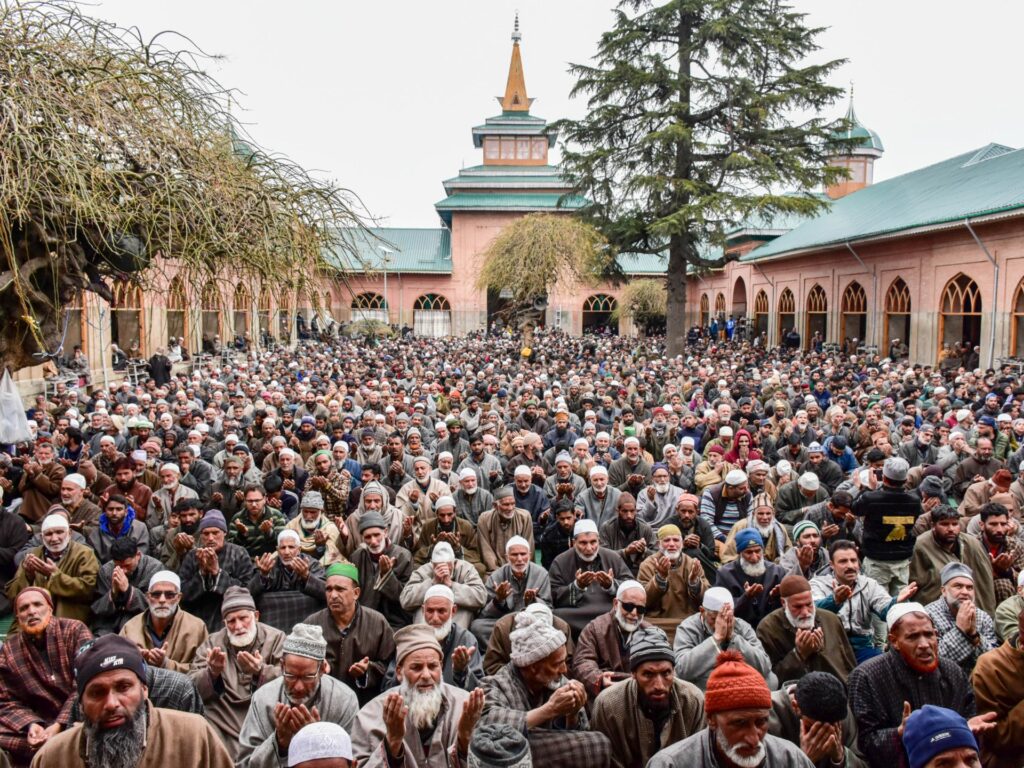
A proposal by the Indian government to standardize Friday sermons (khutbah) across mosques in Kashmir has sparked intense backlash among the local population, political figures, and religious leaders. Critics argue that the move infringes on Kashmir’s freedom of religion and expression, viewing it as an attempt to control religious discourse in the politically sensitive region.
The proposal, reportedly introduced by Prime Minister Narendra Modi’s government, seeks to ensure a uniform message during Friday prayers across all mosques in Kashmir. While the government claims the intention is to promote harmony and counter extremism, many local voices perceive it as a political strategy aimed at curbing dissent and religious autonomy.
Kashmir, which has been at the center of political and territorial disputes between India and Pakistan, has a predominantly Muslim population. Friday sermons traditionally serve as a platform for local religious leaders to address community concerns, political issues, and religious teachings that reflect the unique socio-political context of the region.
Opponents of the uniform sermon proposal argue that it undermines the plurality of religious expression and erodes the traditional rights of Kashmiri imams and community leaders. “This is not just about sermons; it’s about our identity and freedom to express our own perspectives,” said a senior religious scholar from Srinagar.
Political parties in Kashmir, including both mainstream and separatist groups, have condemned the proposal. They warn that the move could escalate tensions in an already volatile region, potentially fueling unrest and resentment among the population.
Human rights organizations and international observers have also raised concerns about the initiative. They warn that it could set a precedent for further state interference in religious practices and freedom of speech in Kashmir.
The Indian government defends the proposal, emphasizing its commitment to promoting peace and unity in Kashmir by preventing inflammatory or divisive rhetoric during sermons. Officials argue that uniform sermons are a preventive measure against extremism and part of broader efforts to integrate Kashmir more firmly into the Indian Union.
Despite official assurances, the backlash reflects deep-rooted mistrust toward New Delhi’s policies in Kashmir, which have historically been perceived by many locals as restrictive and heavy-handed. The move to standardize sermons adds to a series of controversial decisions, including changes to Kashmir’s constitutional status and increased security measures.
Religious leaders across Kashmir have pledged to resist the proposal, with some announcing plans to continue delivering locally crafted sermons that reflect the sentiments and realities of their communities.
Analysts note that the controversy highlights the delicate balance between national security concerns and protecting cultural and religious freedoms in conflict zones. The situation underscores the complexities of governance in Kashmir, where political sensitivities and the quest for autonomy remain deeply intertwined with religious identity.
As the debate over the sermon proposal continues, it remains to be seen whether the government will reconsider or modify its approach in response to local opposition. Meanwhile, the episode has reignited calls for dialogue and genuine engagement with Kashmir’s populace to address broader grievances and foster lasting peace.