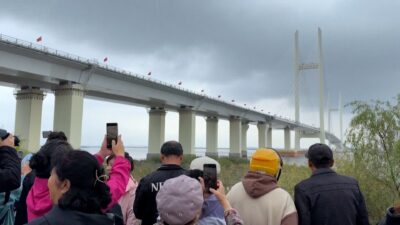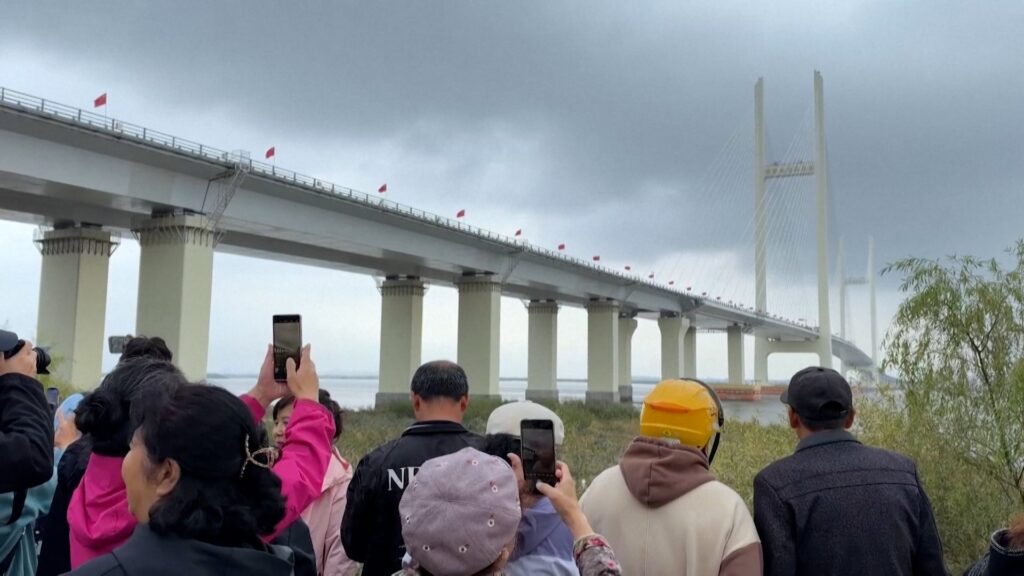
The New Yalu River Bridge linking China and North Korea has officially been opened after an extensive delay of 12 years. This crucial infrastructure project between the two neighboring countries has been eagerly anticipated, as it promises to enhance economic cooperation, trade, and connectivity.
Spanning the Yalu River, which serves as part of the border between China and North Korea, the bridge is expected to facilitate smoother transport of goods and people. The opening marks a significant milestone in bilateral relations, aiming to deepen the economic integration of the adjacent border regions.
Originally planned to reduce transportation bottlenecks and provide a more direct and efficient trade route, the project faced numerous setbacks, including financial constraints, construction challenges, and geopolitical concerns. Despite these hurdles, the completion underscores the commitment of both nations to further develop infrastructural links and expand cross-border exchanges.
The New Yalu River Bridge is strategically important, as it connects the Chinese city of Dandong with the North Korean city of Sinuiju. Dandong, as China’s largest border city facing North Korea, plays a pivotal role in the bilateral trade of goods such as raw materials, food products, and manufactured goods.
North Korea, with limited access to international trade infrastructure, stands to benefit significantly from enhanced connections. The bridge is likely to boost commerce, tourism, and cultural exchanges between the two countries, potentially helping North Korea alleviate some of its economic isolation.
Economic analysts suggest that the operational bridge could pave the way for future joint development zones and industrial parks along the border, encouraging investment and job creation. Moreover, improved infrastructure could facilitate humanitarian aid and emergency response capabilities in times of crisis.
The bridge’s opening also holds geopolitical significance, signaling continued cooperation amid complex international dynamics involving sanctions and diplomatic negotiations over North Korea’s nuclear program.
Local officials on both sides expressed optimism about the increased economic activity and the positive impact on border communities. Residents anticipate growth in business opportunities, greater employment, and improved living standards arising from cross-border interaction.
The New Yalu River Bridge symbolizes a rare moment of infrastructural progress and collaboration in a region often marked by isolation and political tension. While the bridge’s full impact remains to be seen, its opening is a hopeful development for broader regional connectivity and cooperation.
In summary, the opening of the New Yalu River Bridge after a 12-year delay represents a critical development in China-North Korea relations. It enhances trade, opens avenues for economic growth, and underscores a mutual interest in strengthening ties despite past challenges. As the bridge begins operation, it is expected to foster new opportunities and contribute to greater stability and prosperity in the border regions.