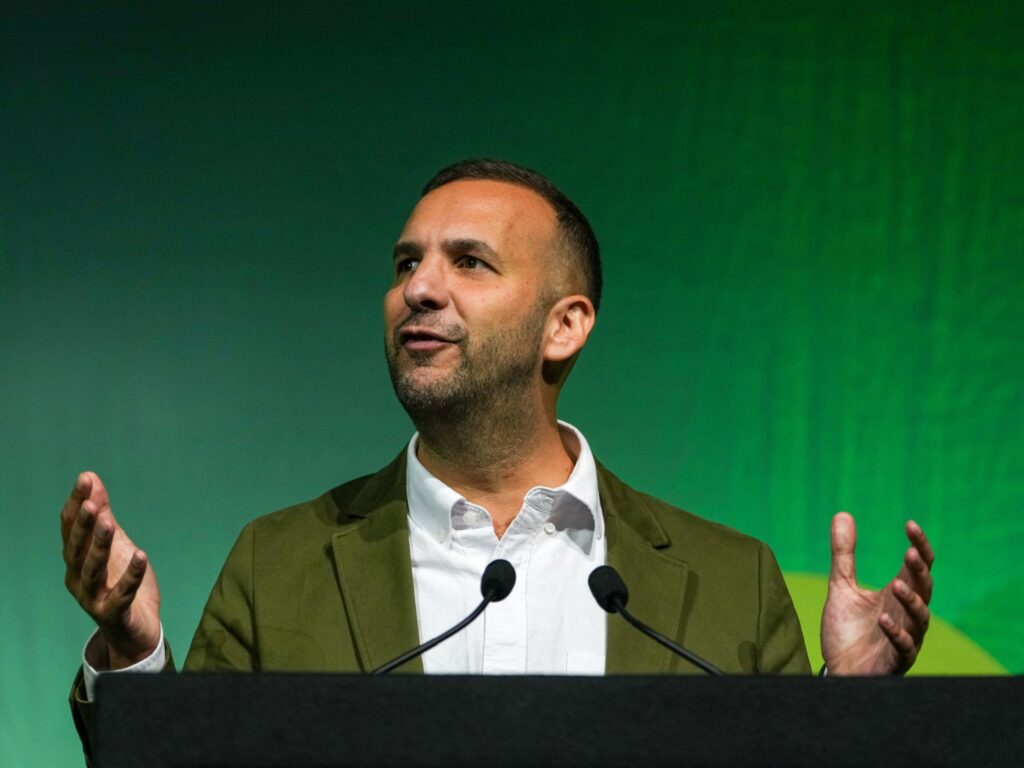
The UK Green Party has recently found itself at the center of a heated debate after passing a contentious motion declaring Zionism as a form of racism. This move has sparked considerable controversy both within the party and in broader political circles. In response to the fallout, Zack Polanski, a prominent figure within the Greens, has called for significant internal reforms aimed at changing the party’s decision-making processes.
Polanski’s primary proposal is to amend party rules to grant Green Party leaders greater control over policy decisions. He argues that this change is necessary to prevent future situations where divisive motions can be passed without thorough scrutiny or consensus.
The motion declaring Zionism as racism was passed in a party conference, reflecting a faction of the Greens that views Zionism — the movement supporting the establishment and continuation of a Jewish state in Israel — as inherently discriminatory. Supporters of the motion believe it aligns with broader anti-racist principles, while opponents have condemned it as unfairly targeting Israel and Jewish communities.
The decision has ignited intense debate within the UK Greens, exposing fractures between members with differing perspectives on Middle Eastern politics. Some Greens argue the motion is necessary to uphold commitments to social justice and human rights, while others warn it risks alienating voters and undermining the party’s reputation.
Zack Polanski, a vocal leader within the party, sees this episode as symptomatic of deeper issues related to the party’s governance. By proposing rule changes, he aims to centralize policy-making authority, allowing leaders to veto or guide motions before they reach a vote. Polanski believes this could foster greater unity and strategic coherence for the Greens in the future.
Critics of Polanski’s proposal worry that increasing centralized control may reduce grassroots participation and democratic engagement within the party. They argue that the diverse membership is a strength, and that open debate and member-led decisions are vital to the Greens’ identity.
The controversy surrounding the Zionism motion will have reverberations beyond internal party politics. It places the Green Party’s stance on Israel and Palestine under scrutiny, potentially impacting its relationships with voters, other political groups, and Jewish communities in the UK.
Political analysts suggest that how the Greens handle this controversy could influence perceptions of the party as a progressive force in UK politics. Balancing internal democracy with effective leadership is a challenge faced by many political parties, and the Greens’ approach may set a precedent.
In summary, the UK Green Party’s recent declaration labeling Zionism as racism has brought significant internal unrest, prompting leader Zack Polanski to propose reforms aimed at enhancing leader influence over policy decisions. The debate highlights enduring tensions around governance, political ideology, and the party’s future direction. As discussions continue, all eyes will be on the Greens to see how they navigate this complex moment in their history.