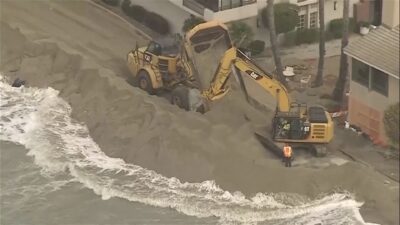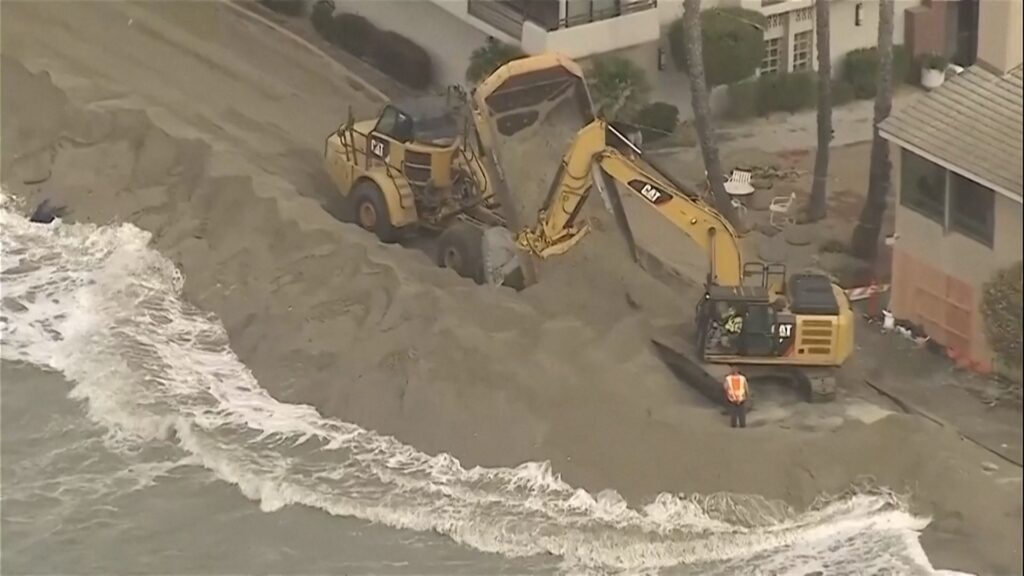
In recent days, the California coast has witnessed dramatic scenes as powerful waves crashed into homes, prompting immediate action from construction crews and homeowners. Along the shoreline, residents and workers have been seen using excavators and other heavy machinery to try and block the seawater from flooding properties and causing further damage.
The situation has escalated due to unusually high tides combined with stormy weather, which have significantly intensified wave activity along the coastal regions. Coastal defenses, including seawalls and natural barriers, have been overwhelmed in some areas, leaving homes vulnerable to the relentless assault of the ocean.
Construction crews have been working around the clock, strategically placing sandbags, rocks, and other materials to shore up defenses temporarily. Excavators are being used to build makeshift barriers aimed at reducing the impact of waves directly against homes and infrastructure.
Many residents have expressed concern over the escalating risk, fearing that their properties could suffer severe damage or become uninhabitable if the waves continue to breach their defenses. Officials have urged evacuees in the most affected neighborhoods to heed warnings and prepare for potential displacement.
This surge in coastal wave activity aligns with broader concerns about rising sea levels and increasingly volatile weather patterns attributed to climate change. Experts warn that such events could become more frequent and severe, necessitating more robust and long-term solutions for coastal protection.
Local governments are assessing damage and considering investments in infrastructure, such as reinforcing existing seawalls, restoring natural dune systems, and implementing zoning changes to reduce future vulnerabilities. The situation remains fluid as weather forecasts predict continued unsettled conditions along the coast.
Emergency services continue to monitor the affected areas closely and provide necessary support to residents and construction teams battling to hold back the ocean’s advance.
Overall, this scenario highlights the urgent need for comprehensive coastal management strategies to safeguard California’s waterfront communities from ongoing and future environmental threats.