Thousands of demonstrators gathered in Brussels to protest against austerity measures, expressing their dissatisfaction with government policies that they believe disproportionately affect ordinary citizens. The rally saw a large turnout, with people from various walks of life uniting to voice their concerns about cuts in public services, social welfare, and economic inequality.
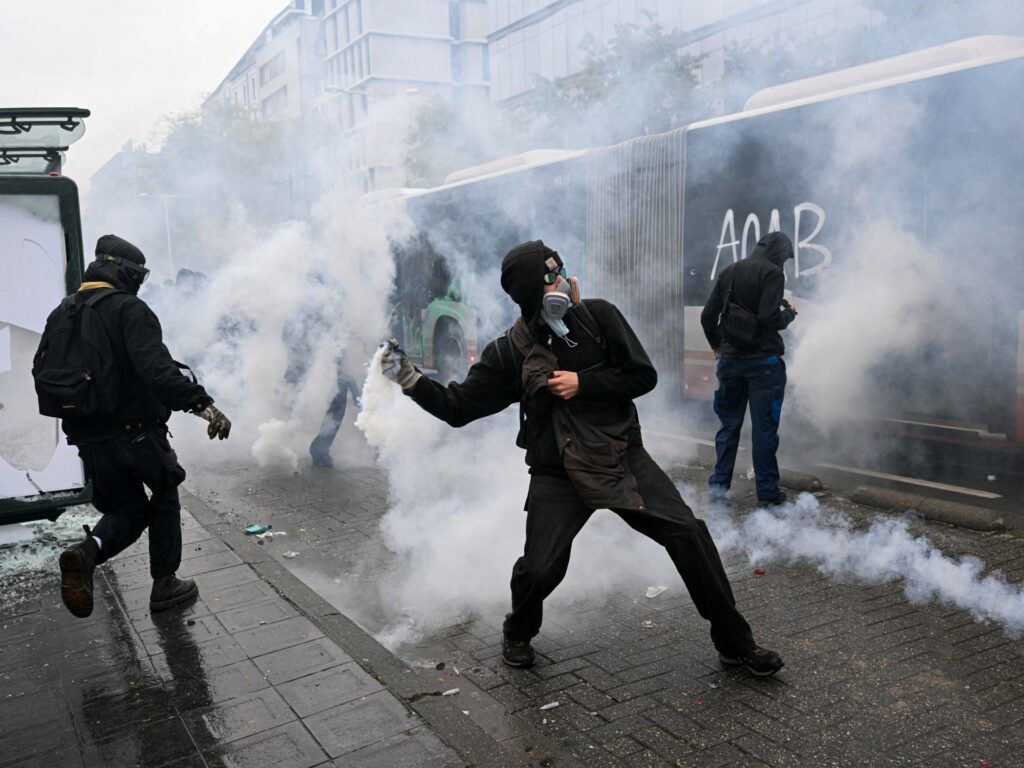
The protest, peaceful for the most part, escalated into clashes on the sidelines as Belgian police encountered groups they labeled as ‘troublemakers.’ In response to incidents of violence and disturbances, law enforcement deployed tear gas, water cannons, and baton charges to disperse the unruly elements and maintain order.
These confrontations underscored the tension surrounding austerity policies in Belgium and across Europe, where similar protests have erupted in recent years due to economic difficulties and government budget tightening. Rally organizers emphasized the need for social justice, better protection of workers’ rights, and the reversal of harsh budget cuts that they argue exacerbate poverty and social exclusion.
Authorities described the situation as challenging but maintained that necessary measures were taken to protect public safety and prevent the escalation of violence. Several individuals were reportedly detained during the clashes, though the overall integrity of the main rally remained intact.
This protest highlights ongoing societal friction in Belgium as citizens grapple with economic reforms amid a broader debate about the future of social welfare policies within the European Union. The government faces mounting pressure to balance fiscal responsibility with the needs of its populace, a challenging task underscored by events like the Brussels rally.
As the situation develops, both activists and authorities are calling for dialogue and solutions that address the root causes of economic hardship while ensuring the peaceful exercise of democratic rights. The Brussels anti-austerity march serves as a potent reminder of the critical need for inclusive policies that promote economic equity and social cohesion across Belgium and the continent.