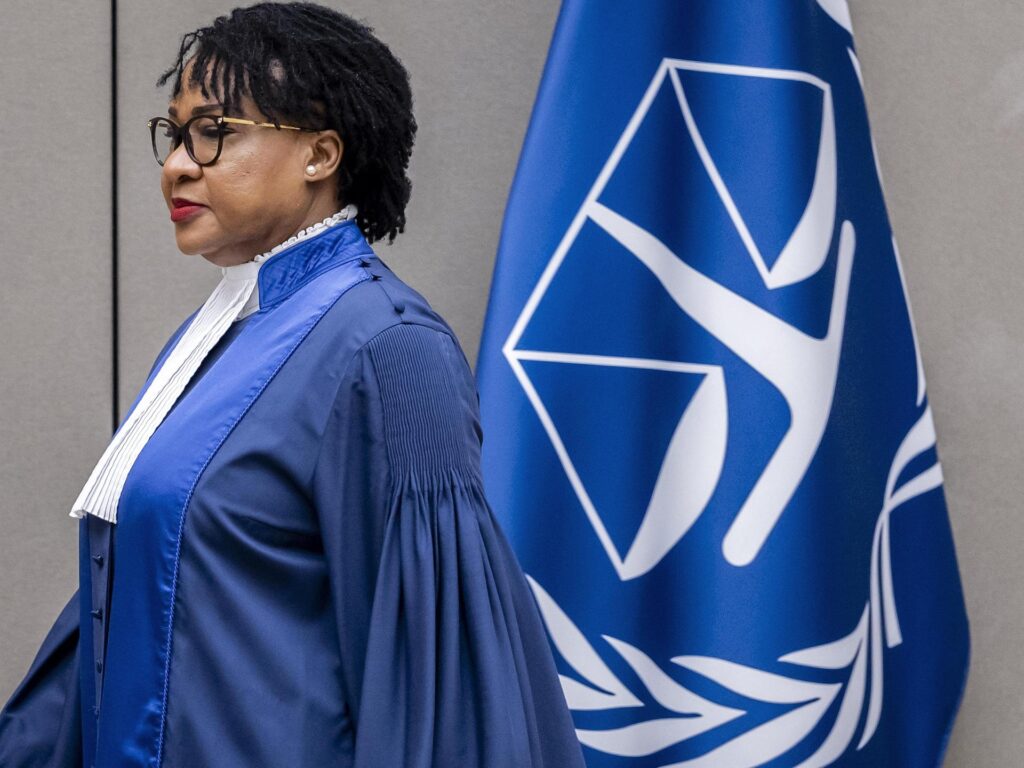
In a significant escalation of tensions, the United States government has imposed sanctions directly targeting the International Criminal Court (ICC), marking a historic move against the international tribunal. This latest action is part of the Trump administration’s broader campaign to dismantle the ICC, demonstrating a clear effort to stem the flow of resources and undermine the court’s operational capabilities.
The ICC, established to prosecute individuals for war crimes, genocide, and crimes against humanity, has long been a focal point of contention within US foreign policy, particularly under the Trump administration. The US has expressed concerns that the court could potentially bring legal actions against its citizens, especially military personnel stationed abroad, without US consent.
The sanctions include restrictions aimed at the ICC’s officials and entities associated with the tribunal, creating significant hurdles for the court’s financial and administrative functions. These measures underscore the administration’s intent to stall the ICC’s investigations and prosecutions involving American citizens or interests.
International reactions have been mixed, with some allies expressing support for the US’s stance on sovereignty and the protection of its citizens, while others condemned the sanctions as an attack on international justice and rule of law. Critics argue that this move could weaken global efforts to hold perpetrators of international crimes accountable.
The ICC has faced various challenges since its inception, including limited jurisdiction, reliance on member states for enforcement, and political pushback from powerful nations. Despite these hurdles, the court continues to pursue cases in multiple regions globally.
This US action represents a pivotal moment in the relationship between national sovereignty and international judicial mechanisms, raising questions about the future of global cooperation in justice. The move may set a precedent for other countries critical of the ICC to similarly hinder its operations.
As the ICC grapples with these sanctions, the international community watches closely to see whether this will lead to increased polarization or dialogue aimed at reforming and strengthening international criminal justice institutions.
The Trump administration has consistently sought to prioritize American interests and has viewed the ICC as a threat to those interests. By targeting the court itself with sanctions, the US sends a strong message about its willingness to use economic and political tools to shape the landscape of international law.
This development follows a series of previous confrontations with the ICC, including restrictions on travel for ICC judges and prosecutors to the US, and warnings against the court’s attempts to investigate US personnel or allies.
In conclusion, the US sanctions against the International Criminal Court represent a major escalation in the ongoing struggle between national governments and international judicial bodies. The full impact of this move is yet to be seen, but it undoubtedly heightens the tension surrounding international law enforcement and the protection of human rights globally.