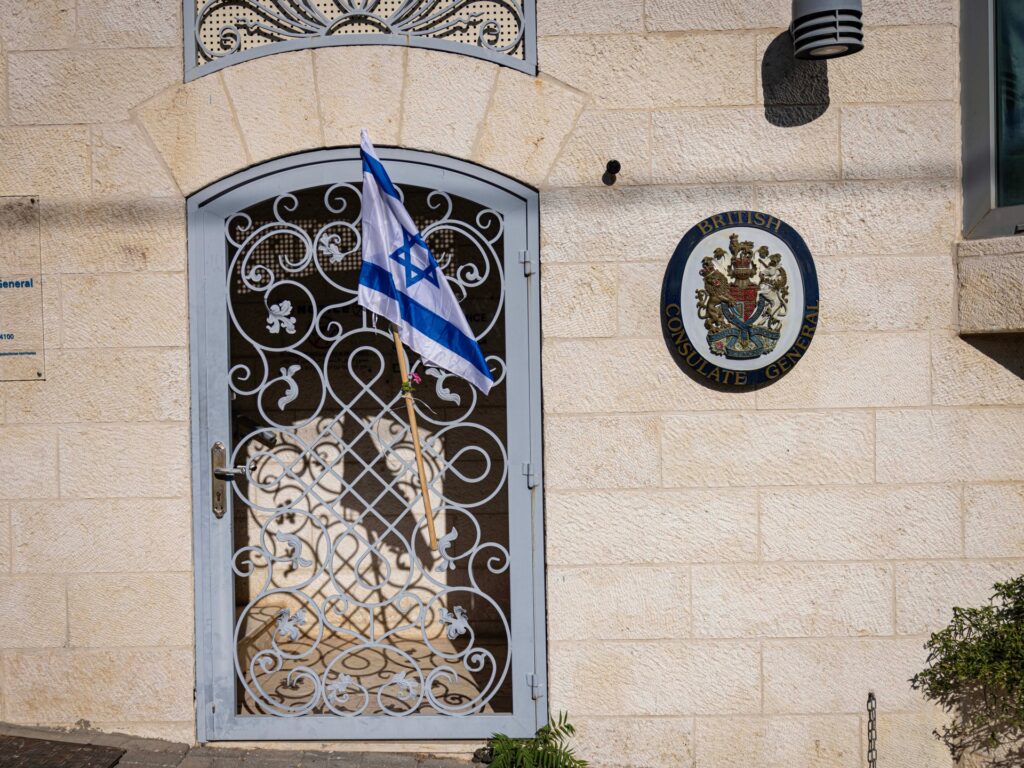
The relationship between the United Kingdom and Israel has been marked by a series of significant events and tensions, tracing back to the era before Israel’s establishment in 1948. These moments have shaped the diplomatic dynamics between the two nations, culminating recently in Israel’s order to shut down the UK’s Jerusalem consulate, signaling yet another downturn in their complex relationship.
The roots of UK-Israel tension can be found in the British Mandate period over Palestine, when Britain was responsible for governance from 1920 to 1948. During this time, the King’s David Hotel in Jerusalem became a notable symbol of conflict. In 1946, the hotel was bombed by the Irgun, a Jewish underground organization aiming to push British forces out of Palestine. This attack caused significant casualties and heightened animosity, marking an early flashpoint in UK-Israel relations.
Following the end of the British Mandate and the declaration of the State of Israel in 1948, diplomatic ties between the countries were established but often fraught with challenges. The UK initially recognized Israel, but its diplomatic approach was cautious due to the delicate balance it sought to maintain in the Middle East region.
Over the decades, several key events tested the bilateral relationship. These included Britain’s response to wars involving Israel and the Palestinians, disagreements over settlement policies, and divergent perspectives on peace processes. The UK often found itself balancing its traditional support for Israel with calls for Palestinian rights and adherence to international law.
Fast forward to recent years, tensions have surfaced over issues such as the status of Jerusalem. Britain has maintained that the city’s final status should be resolved through negotiations, a stance that sometimes conflicts with Israeli policies on sovereignty and consular presence.
The latest development, Israel ordering the closure of the UK’s consulate in Jerusalem, is emblematic of escalating friction. Israel views the consulate’s operations as inconsistent with its claims over the city, while the UK sees this move as undermining its diplomatic engagement and international norms.
This consulate row encapsulates a long history of diplomatic sensitivities and disagreements, highlighting the continued complexity of UK-Israel relations. Each episode, from the King David Hotel bombing to contemporary disputes, reflects a broader narrative of contested interests, historical grievances, and diplomatic balancing acts.
As the two countries navigate these challenges, the future of their relationship will depend on careful diplomacy and mutual understanding, acknowledging their shared history while addressing ongoing points of contention.