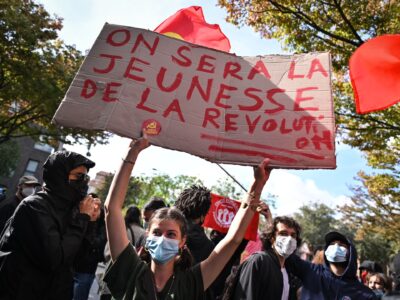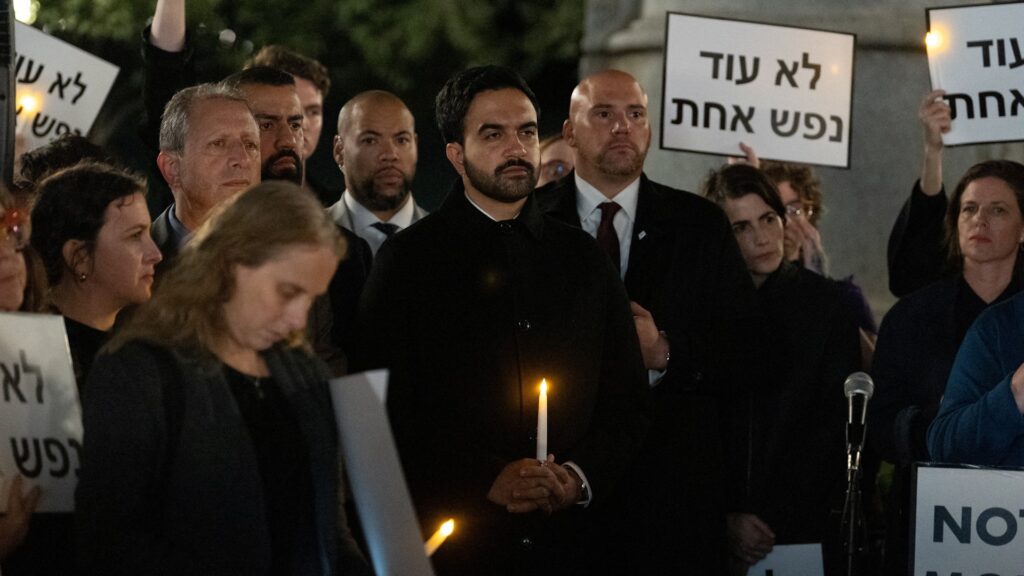
New York City Mayor Zohran Mamdani has come under intense criticism and public backlash for attending a vigil commemorating events on October 7. The mayor’s attendance at the vigil sparked anger among certain groups of New Yorkers, who gathered in crowds expressing their disapproval and labeling him a ‘traitor.’
The vigil, held to remember the significance of October 7, became a focal point of controversy as political and community tensions surfaced openly. Supporters of the mayor argue that honoring the day with a vigil is a gesture of solidarity and remembrance for those affected by events linked to October 7, while critics see it as an ill-timed and politically charged act.
Witnesses reported that the atmosphere at the vigil was charged with emotion, with Mayor Mamdani standing among attendees in a show of unity. However, outside the vigil, crowds vocalized their dissent strongly, chanting slogans and directing pointed remarks at the mayor.
This incident marks a challenging moment in Mayor Mamdani’s tenure, as he navigates a complex political landscape in one of the world’s most diverse cities. The mayor’s decision to participate in the vigil reflects a commitment to community engagement but also highlights the fine line public officials must walk when addressing sensitive and divisive historical or political issues.
Political analysts note that the response from the public underscores the polarized environment within New York City politics. Some see the mayor’s presence at the vigil as a courageous stand that acknowledges often overlooked narratives, while others view it as a move that could alienate certain voter groups.
Mayor Mamdani has not yet publicly responded to the allegations or the accusations labeling him a traitor. City officials and community leaders have called for calm and dialogue to bridge the divides that this event has exposed.
The controversy surrounding the October 7 vigil and the mayor’s role is likely to continue shaping public discourse and may influence upcoming city policies and political alliances. As New York City grapples with its complex social fabric, leaders like Mayor Mamdani are under pressure to balance acknowledgment of history and community sensitivities.
This event has opened a broader conversation about the responsibilities of elected officials in representing diverse communities, the power of public symbolism, and the impact of political actions on social cohesion. As the city moves forward, efforts to heal divisions and foster mutual understanding will be critical to maintaining New York’s reputation as a vibrant and inclusive metropolis.