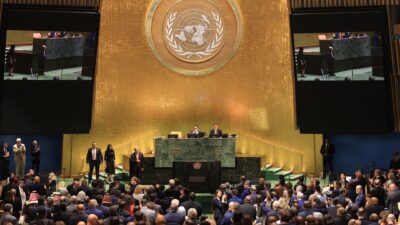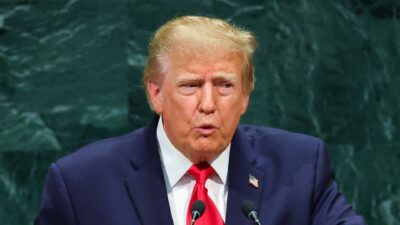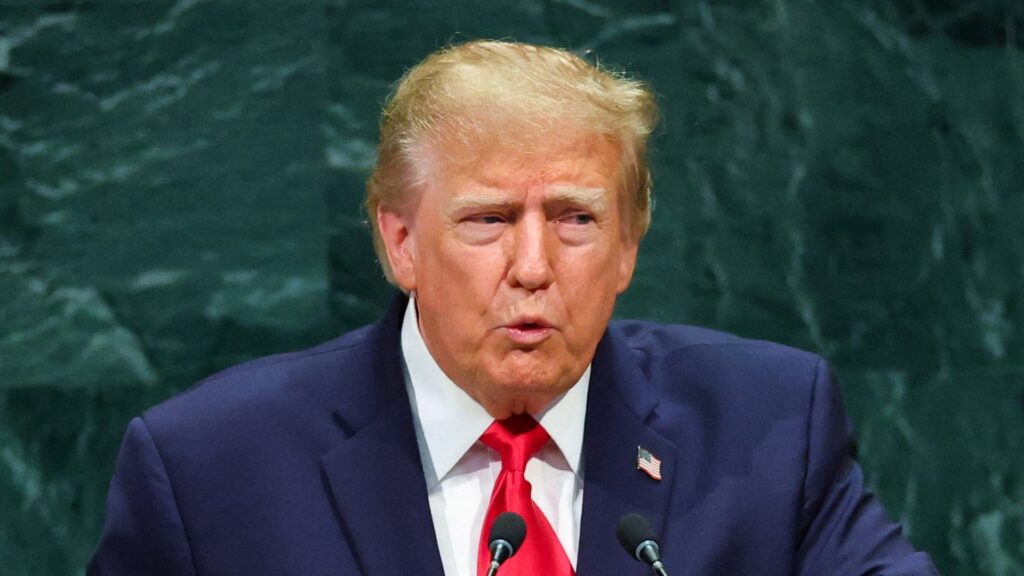
At the recent United Nations General Assembly, US President Donald Trump issued a stark statement regarding Iran, highlighting the critical crossroads faced by his administration. Speaking to the international body, Trump declared that he has a ‘big decision to make’ about how to handle relations with Iran, quoting the stark choice of whether to ‘annihilate’ the country or ‘make a deal.’
This statement has sparked widespread attention and concern across the globe due to its dramatic presentation and the implications it carries for international diplomacy and security. The United States and Iran have had a notably tense relationship in recent years, centered around nuclear development, regional security, and sanctions.
Trump’s rhetoric signals a pivotal moment in US foreign policy, suggesting either a path toward severe military intervention or a potential diplomatic breakthrough. The phrase ‘annihilate’ conveys the possibility of harsh military action, which many fear could lead to increased conflict in the Middle East and beyond. On the other hand, the option to ‘make a deal’ hints at negotiations and diplomacy, potentially revitalizing the Joint Comprehensive Plan of Action (JCPOA) or a new agreement that addresses concerns over Iran’s nuclear program and regional activities.
Observers note that Trump’s framing of the issue as a binary choice underscores the high stakes involved and the pressure on the administration to act decisively. Analysts and diplomats around the world are closely watching developments, aware that the decision could significantly impact international relations.
The statement at the UN General Assembly also serves as a reminder of the broader geopolitical tensions involving Iran. The country has been a focal point for various conflicts and diplomatic efforts, including its relations with European countries, Russia, China, and neighboring Middle Eastern states.
Trump’s mention of a big decision has ignited debates within the US political landscape as well, with opinions varying widely on the best approach to Iran. Some advocate for a firm stance and applying maximum pressure through sanctions, while others call for renewed diplomatic engagement to prevent conflict.
This announcement comes amid ongoing challenges, including Iran’s nuclear advancements and its role in regional proxy conflicts. The Trump administration’s next moves are expected to be closely analyzed, with potential actions ranging from escalated sanctions, military posturing, or renewed peace talks.
International leaders are urging restraint and emphasizing the importance of diplomatic solutions to avoid any military escalation. The global community recognizes the risks inherent in escalating tensions and the need for constructive dialogue.
As Trump weighs his options, the world waits to see if his administration will choose confrontation or collaboration in dealing with Iran. The outcome of this decision will have far-reaching consequences, affecting not only the US and Iran but also global peace and security.
In summary, President Trump’s address to the UN General Assembly has brought to light a crucial juncture in US-Iran relations, framed as a choice between ‘annihilating’ Iran or ‘making a deal.’ This pivotal moment reflects the broader complexities of international diplomacy and the ongoing struggle to maintain stability in a volatile region.