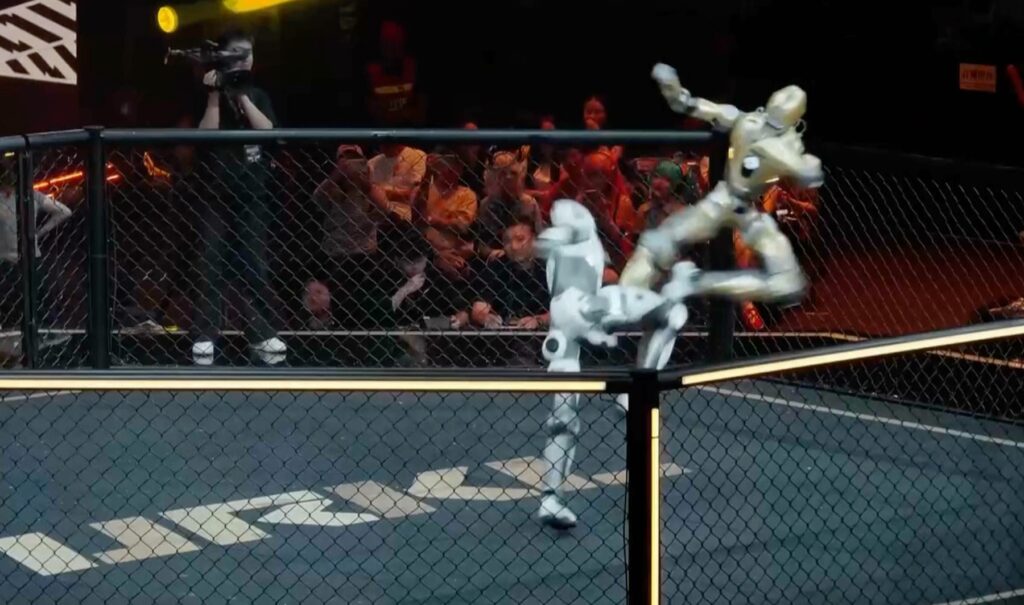
In an electrifying event that captured the imagination of tech enthusiasts and spectators alike, humanoid robots recently battled it out in a cage match held in Shanghai. This groundbreaking competition showcased the rapid advancements in robotics, artificial intelligence, and engineering, presenting a new frontier in entertainment and technology.
The event, held in a specially designed arena equipped with safety measures and high-tech monitoring systems, featured several humanoid robots from different manufacturers and developers. Each robot was built with intricate mechanical joints, sensors, and AI capabilities that allowed them to strategize and adapt during the fight, mimicking human-like combat skills.
The competition garnered significant media attention and drew a large crowd, eager to witness the clash of these mechanical gladiators. The robots were programmed to engage in combat using a variety of techniques, including grappling, strikes, and tactical maneuvers, all while adhering to strict safety protocols to prevent damage beyond repair.
Organizers of the event highlighted the dual purpose of the cage match: to entertain and to push the boundaries of robot mobility, balance, and decision-making under pressure. The fights demonstrated remarkable fluidity and coordination, reflecting the sophisticated programming and engineering efforts invested in these machines.
Developers explained that the robots used advanced AI algorithms that processed real-time data from sensors to make quick decisions during the matches. These AI systems could analyze opponents’ movements and adapt strategies on the fly, providing a glimpse into the potential future applications of such technologies in other fields.
The Shanghai cage match also sparked discussions about the ethical and practical implications of robot combat. While the event was primarily a demonstration of technological prowess, experts debated the future impact of such AI-driven machines in military, security, and even everyday scenarios.
Beyond the spectacle, the event served as a platform for collaboration among engineers, AI specialists, and robotics companies. It fostered innovation and the exchange of ideas to improve robot design, AI responsiveness, and safety mechanisms.
Spectators were impressed by the agility and resilience of the humanoid robots, which were able to recover from falls and continue fighting with an impressive level of endurance. The visual and technical aspects of the matches were enhanced by dynamic camera angles and instant replays, providing an immersive experience similar to human combat sports.
This pioneering event in Shanghai marked a milestone in the evolution of robotics, blending cutting-edge technology with entertainment. It also raised awareness of the potential for humanoid robots to perform complex tasks requiring agility, strength, and cognitive skills.
Plans are underway to make this cage match an annual event, with expectations that future contests will feature even more advanced robots with enhanced capabilities. Organizers are also exploring potential collaborations with other international robotics tournaments to create a global circuit of humanoid robot combat.
As the event concluded, participants expressed excitement about the possibilities unlocked by this new sport. The Shanghai humanoid robot cage match stands as a testament to human creativity, technological progress, and the exciting frontier where machine meets sport.