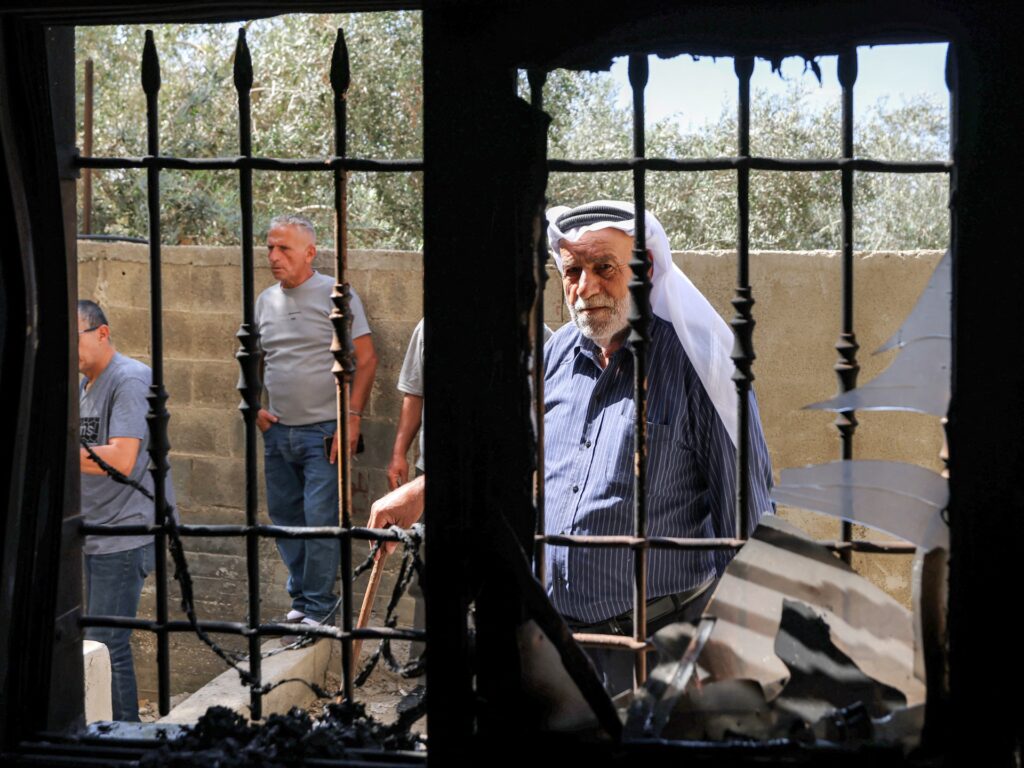
In a troubling incident in the West Bank, Israeli forces and settlers have attacked two mosques, leading to significant tensions in the region. The attacks unfolded when settlers set fire to and vandalised one mosque, an act that represents a serious violation of religious sanctity and escalates fears of further violence. In response to the situation, Israeli forces fired tear gas into the second mosque, intensifying the conflict and causing distress to worshippers and local residents.
The first mosque suffered from deliberate arson and vandalism by settlers, damaging its structure and sacred interiors. Such actions are viewed by many as provocative and are condemned by various peace advocates and human rights organizations worldwide. The motivations behind the settler’s actions appear tied to ongoing disputes over land and religious sites in the West Bank, a region long contested by different groups.
The use of tear gas by Israeli forces inside the second mosque was intended to disperse crowds or prevent further escalation, according to authorities. However, the measure has been criticized for its potential to cause harm to innocent civilians engaged in worship. The sudden eruption of violence during prayer times has sparked outrage among the local Muslim community and drawn international attention.
This dual attack underscores the fragility of the situation in the West Bank, where religious and political tensions frequently intertwine. Mosques, often seen as sanctuaries of peace and spiritual refuge, have increasingly become flashpoints in conflicts between Israeli settlers, military forces, and Palestinian residents.
Local leaders and international observers have called for calm and restraint following these episodes. There are growing demands for thorough investigations into the attacks to bring those responsible to justice and to prevent recurrence. Many fear that such incidents fuel hatred and undermine efforts toward peaceful dialogue and coexistence in the region.
The attacks also highlight broader concerns about the protection of religious sites in conflict zones. Ensuring the safety and respect of places of worship is crucial for maintaining communal harmony and facilitating peaceful resolutions.
Efforts to address the root causes of these conflicts continue amid complicated political landscapes, with calls for renewed negotiations and measures that promote respect for religious rights and human dignity. The international community’s role in mediating and supporting peace initiatives remains vital to reducing tensions and avoiding further violence.
In summary, the attacks on two West Bank mosques by Israeli settlers and forces represent a significant escalation in an already volatile environment. They serve as a grim reminder of the urgent need for dialogue, respect, and protection of fundamental human and religious rights to foster a sustainable peace in the region.