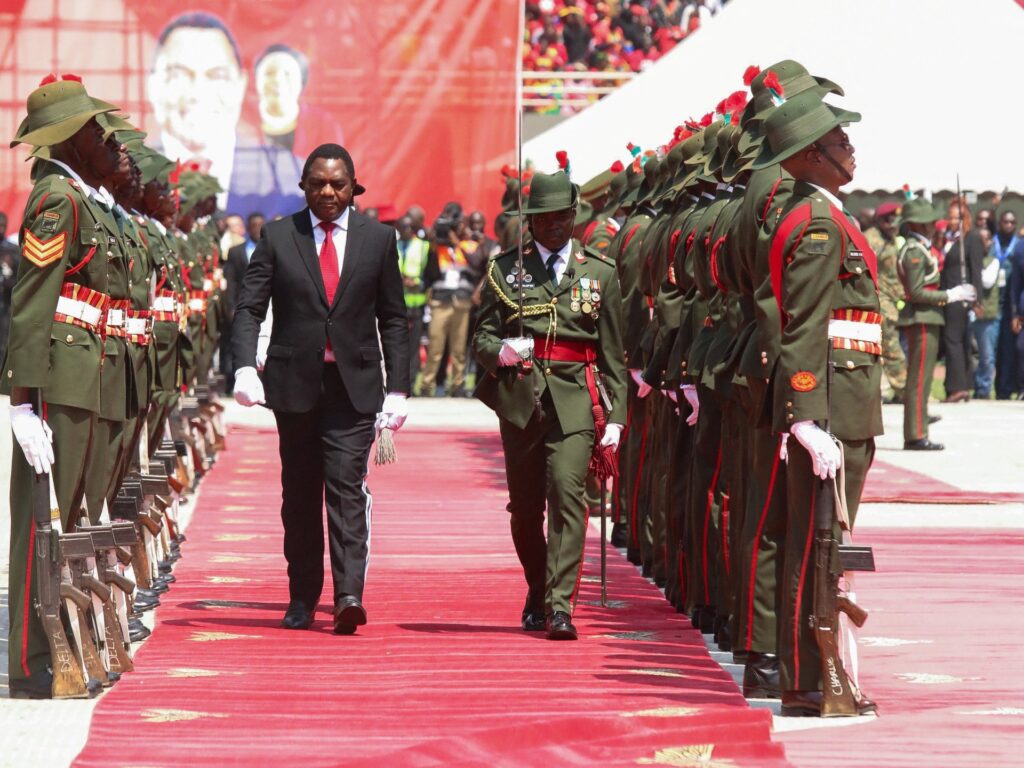
Hakainde Hichilema has been sworn in as the President of Zambia following a highly contested election that has stirred significant political turmoil in the country. The inauguration occurred against a backdrop of controversy, as the incumbent’s main rival, who contested the election results, remains imprisoned. Additionally, the judiciary has faced closures, raising concerns about the state of democracy and the rule of law in Zambia.
The election was held last month and quickly became a focal point of national and international attention due to allegations of electoral fraud and suppression. Despite these challenges, Hichilema was declared the winner and took the presidential oath, signaling a new chapter for Zambia’s governance.
International observers and local civil society organizations have expressed apprehension over the events leading up to and following the election. The detention of prominent opposition figures and the closure of courts suggest a clampdown on dissent and judicial independence, which are crucial for a functioning democracy.
Hichilema, known for his business acumen and opposition leadership, campaigned on promises of economic reform, anti-corruption measures, and national unity. His ascendancy to the presidency is seen by many as a potential turning point for Zambia’s political landscape, though the current situation presents obstacles that need to be addressed to ensure stability and progress.
The international community has called for the release of jailed opposition leaders and the reopening of constitutional institutions to uphold democratic principles. Civil unrest and protests have heightened tensions, underscoring the urgency for dialogue and reconciliation among Zambia’s political factions.
Economic challenges loom large, with expectations resting on the new administration to implement policies that encourage growth, investment, and social welfare improvements. Hichilema’s leadership will be closely watched to see if he can navigate the delicate political environment and deliver on his campaign promises.
Inauguration ceremonies were conducted amid tight security measures, reflecting the government’s intent to maintain order. The presence of foreign dignitaries signaled diplomatic engagement, yet many worry about the long-term implications of the current political crisis.
As Zambia embarks on this new chapter with Hichilema at the helm, the nation’s citizens and observers worldwide remain hopeful yet cautious. The success of his presidency will likely hinge on his ability to foster inclusivity, respect the rule of law, and heal the divisions that the disputed election has exacerbated.
The coming months will be critical in determining whether Zambia can overcome the immediate political turmoil and set a course towards sustainable democracy and development. Hichilema’s administration faces the dual challenge of governing effectively while restoring public trust in the electoral and judicial systems.
In summary, Hakainde Hichilema’s inauguration as Zambia’s president marks a significant event shadowed by political strife. The unresolved disputes, imprisonment of opposition figures, and judiciary closures present serious challenges ahead. The nation and the international community are watching closely, hoping for a peaceful resolution and a stable future for Zambia.