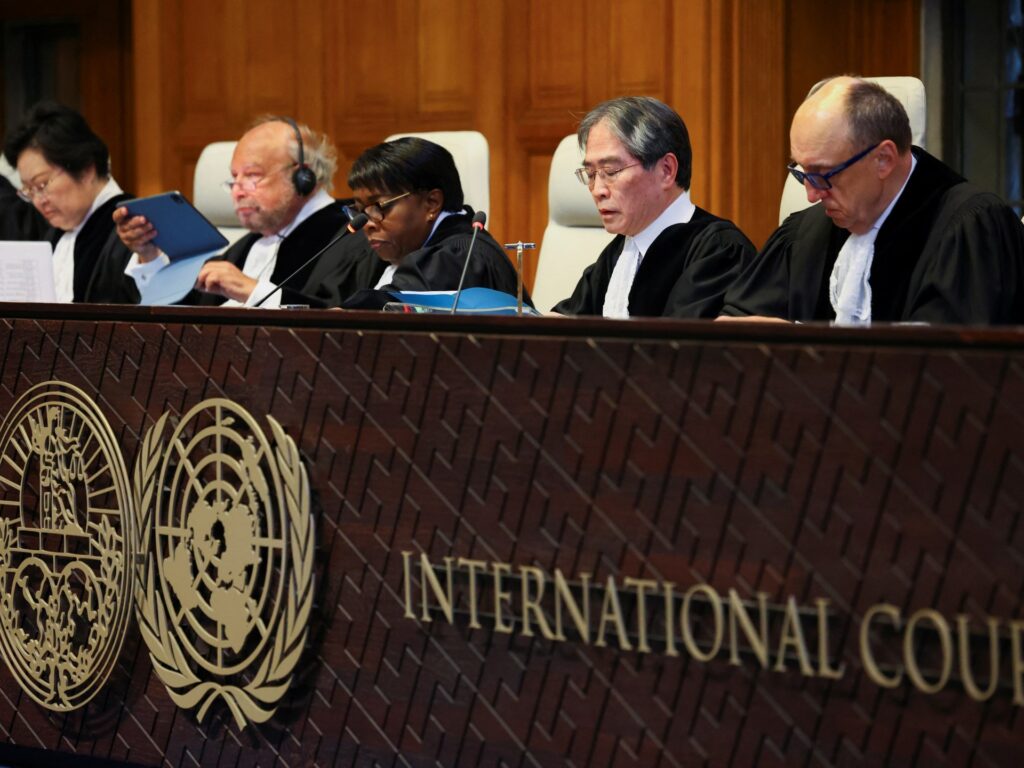
Vanuatu has escalated its longstanding territorial dispute with France by taking the matter to the International Court of Justice (ICJ). The dispute centers around the sovereignty of the Matthew and Hunter islands, two small landmasses located in the South Pacific. Vanuatu asserts that French control over these islands is a remnant of colonial-era occupation, contending that the islands rightfully belong to Vanuatu as part of its independent territory.
The matter has garnered attention not only for its geopolitical significance but also due to the unique domestic implications it has in France. The case has been leveraged by the far-right political factions in France, who are accused of using the dispute as a political weapon to stoke nationalist sentiment and challenge the current government’s stance on overseas territories.
Historically, the Matthew and Hunter islands have been under French administration, but Vanuatu has maintained claims based on geographic proximity and indigenous usage, arguing that the islands were never formally ceded to France under equitable terms. The islands are uninhabited but hold strategic and economic value, including potential access to marine resources and exclusive economic zones.
In recent years, tensions between Vanuatu and France over the islands have escalated with competing naval patrols and diplomatic protests. Vanuatu’s decision to bring the dispute before the ICJ marks a significant step aimed at achieving international legal resolution and affirming its sovereignty claims under international law.
The outcome of this case could have wider implications for post-colonial territorial disputes globally, as many countries seek to address unresolved historical claims dating back to colonial administrations. It also underscores the continuing impact of colonial legacies in the Pacific region, where complex sovereignty issues remain sensitive and politically charged.
As the ICJ reviews the submissions from both parties, stakeholders expect a careful legal examination of historical treaties, administrative control, and principles of self-determination to guide the court’s decision. Both Vanuatu and France have expressed commitment to peaceful negotiation but await the ICJ’s judgment to provide clarity and legitimacy to whichever party emerges with recognized sovereignty over Matthew and Hunter islands.