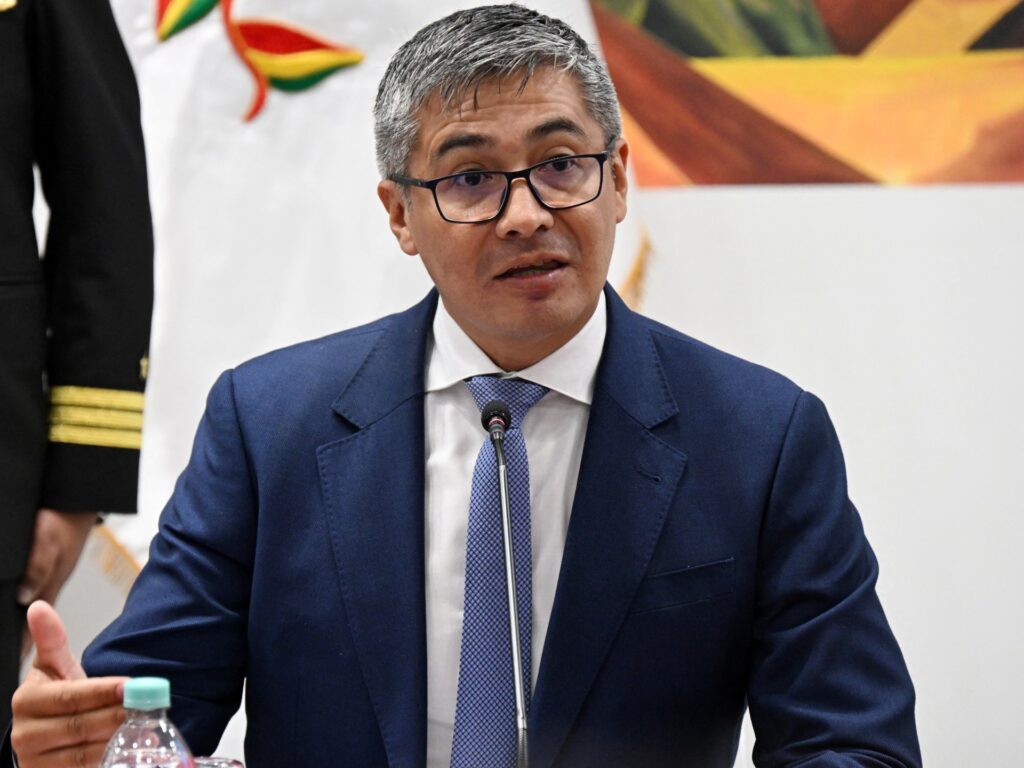
In a significant political move amid widespread unrest, Bolivia’s President Rodrigo Paz has dismissed Economy Minister Jose Gabriel Espinoza. This decision comes just days after Espinoza was officially censured by the national legislature, underlining the heightened tensions surrounding economic reforms in the country.
Jose Gabriel Espinoza had been a central figure in the government’s efforts to implement changes aimed at stabilizing and revitalizing Bolivia’s economy. However, these efforts sparked considerable controversy and opposition, culminating in the legislative censure which questioned both his methods and the broader economic policies he supported.
The censure reflected deep divisions within Bolivia’s political landscape, with many lawmakers and public groups vehemently opposing the reforms proposed by the administration. Critics argue that the measures could worsen inequality and negatively impact ordinary citizens, particularly those in low-income brackets.
President Paz’s decision to fire Espinoza signals a strategic attempt to ease political pressures and quell unrest that has increasingly threatened social stability across the country. The economy minister’s removal is expected to pave the way for new leadership that might adopt a more conciliatory and inclusive approach to economic policy-making.
Public demonstrations and protests have intensified in recent weeks, with various social and labor organizations mobilizing to express their dissatisfaction with the government’s approach. The unrest underscores the complex challenges Bolivia faces as it seeks to balance economic development with social equity and political consensus.
President Paz faces the daunting task of steering the country through these turbulent times. The administration’s next steps will be closely watched by international observers and domestic stakeholders alike, as they will shape Bolivia’s economic trajectory and political climate in the coming months.
Analysts suggest that the new economy minister will need to build broad-based support and engage in dialogue with disparate groups to foster a more stable environment for reform implementation. The president’s move to replace Espinoza may thus be seen as an attempt to recalibrate policy direction and rebuild trust with the populace.
This development also highlights the inherent difficulties in managing economic reforms in politically volatile settings. With socioeconomic disparities and political fragmentation influencing public sentiment, Bolivia’s leadership must navigate complex dynamics to achieve sustainable progress.
In conclusion, the dismissal of Jose Gabriel Espinoza marks a pivotal moment for Bolivia, reflecting the interplay of political pressures and economic policy in the country. How the new appointment will impact the government’s ability to maintain order and push forward reforms remains to be seen, but it is clear that Bolivia’s path forward will require careful balance and substantive engagement with all stakeholders involved.