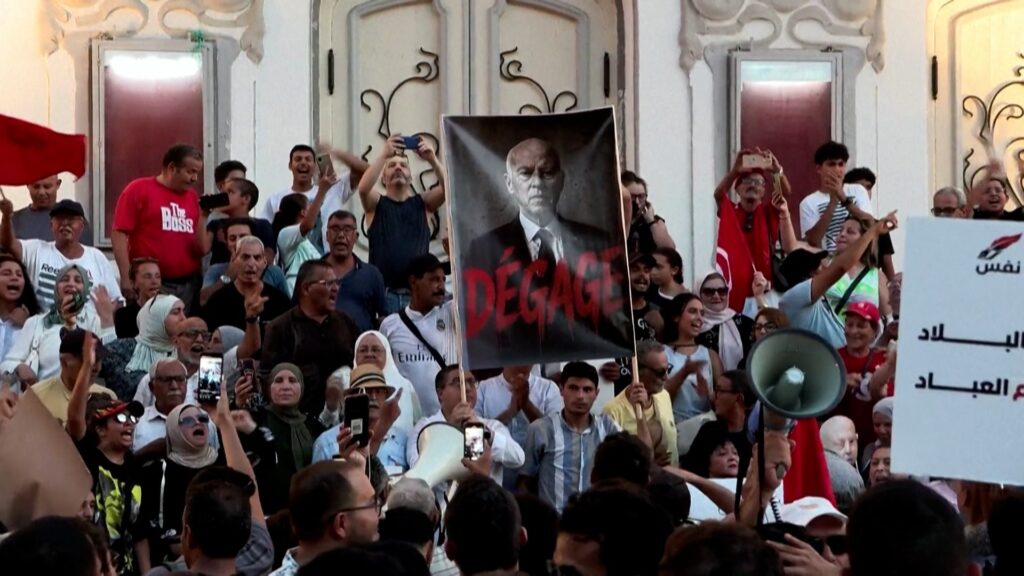
On Thursday, the capital city of Tunis witnessed a significant wave of protests as hundreds of Tunisians gathered to voice their demands for the resignation of President Kais Saied. The demonstrators expressed deep dissatisfaction with the current political and economic situation in the country, calling for change in leadership.
Protesters filled the streets, carrying banners and chanting slogans that reflected their frustration with the administration. The calls for President Kais Saied to step down are rooted in concerns over governance, economic challenges, and perceived democratic backsliding since Saied took office.
In recent times, Tunisia has faced a range of issues, including rising unemployment, inflation, and political instability, which have all contributed to public unrest. Despite hopes for reform and a better future, many citizens believe the current leadership has failed to deliver meaningful progress.
The demonstration is a clear indication of the growing opposition against President Saied’s policies and his approach to managing the country’s affairs. As the protests gain momentum, questions arise about the future trajectory of Tunisia’s political landscape and how the government will respond to these demands.
Observers note that the situation remains tense, with security forces on alert to manage the crowds and maintain order. The international community is also watching closely, given Tunisia’s strategic importance and its recent strides toward democracy following the Arab Spring.
While the protests represent a significant display of public sentiment, the response from President Saied and his administration will be crucial in determining whether these calls for resignation translate into political change or further unrest.
For now, Tunis remains a focal point of political activity, as citizens continue to push for a leadership that can address their concerns and steer the country towards stability and prosperity.