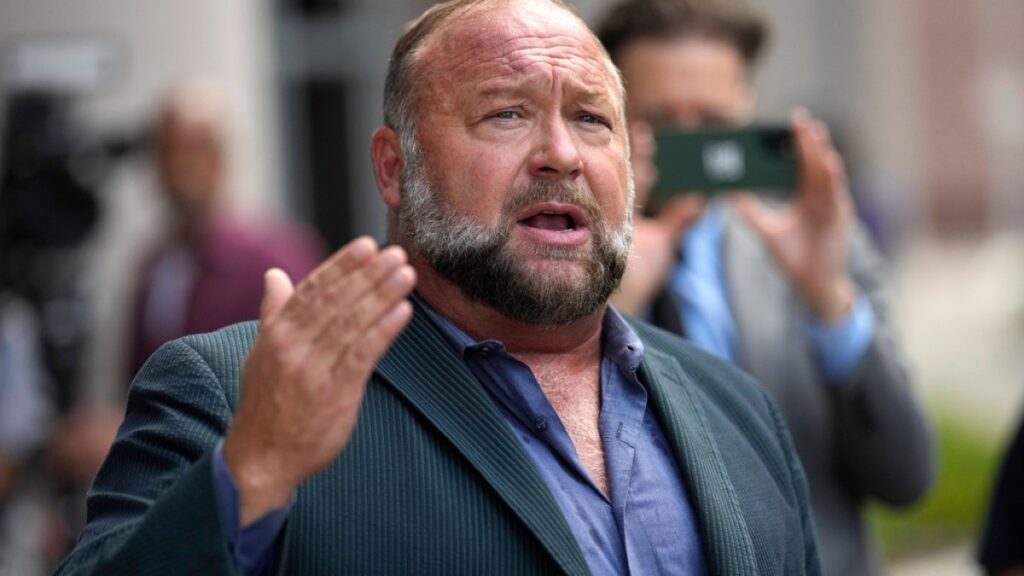
In a significant legal development, a US court has drastically reduced the penalties imposed on Alex Jones, the Infowars founder, concerning his false claims about the Sandy Hook Elementary School shooting. Originally, Jones was ordered to pay $50 million in fines for spreading conspiracy theories that the tragic 2012 shooting was a hoax. These claims deeply hurt the victims’ families and led to multiple defamation lawsuits.
The court’s recent decision slashed his financial penalty from $50 million to $1.5 million, marking a substantial decrease. This ruling comes amid ongoing legal battles surrounding Jones’ controversial statements and their impact on the Sandy Hook families.
Alex Jones had repeatedly asserted that the school shooting, which resulted in the deaths of 20 children and six educators, was staged by the government. These assertions were widely debunked and condemned. Parents of the victims filed suits accusing Jones of infliction of emotional distress and defamation.
The original $50 million fine reflected the court’s determination of the severe harm caused by Jones’s misinformation. However, upon review, a panel of judges decided to reduce the amount significantly, citing various legal considerations including Jones’s ability to pay and the proportionality of the punishment.
The ruling has sparked varied reactions. Advocates for the victims’ families have expressed disappointment, feeling the reduction undermines the seriousness of the harm caused. Conversely, some legal experts view the cut as a move toward a more balanced punitive approach.
Alex Jones remains a highly controversial figure due to his role in promoting conspiracy theories through his Infowars platform. Despite the court’s ruling, the case highlights ongoing challenges related to misinformation, free speech, and accountability in the digital age.
The Sandy Hook shooting remains a deeply emotional and sensitive topic in the United States, and this case underscores the legal and ethical battles involved in addressing false information that can cause real-world harm. The reduced fine does not change the court’s condemnation of Jones’s actions but potentially reflects a strategic judicial recalibration.
Moving forward, the ruling may influence how lower courts handle similar defamation and misinformation cases, particularly those involving grossly false claims and significant emotional damage. The legal community and the public will be watching closely to see how these complex issues evolve.
Ultimately, this court decision contributes to the ongoing discourse about protecting free expression while ensuring individuals and families are shielded from harmful falsehoods in an increasingly interconnected world.