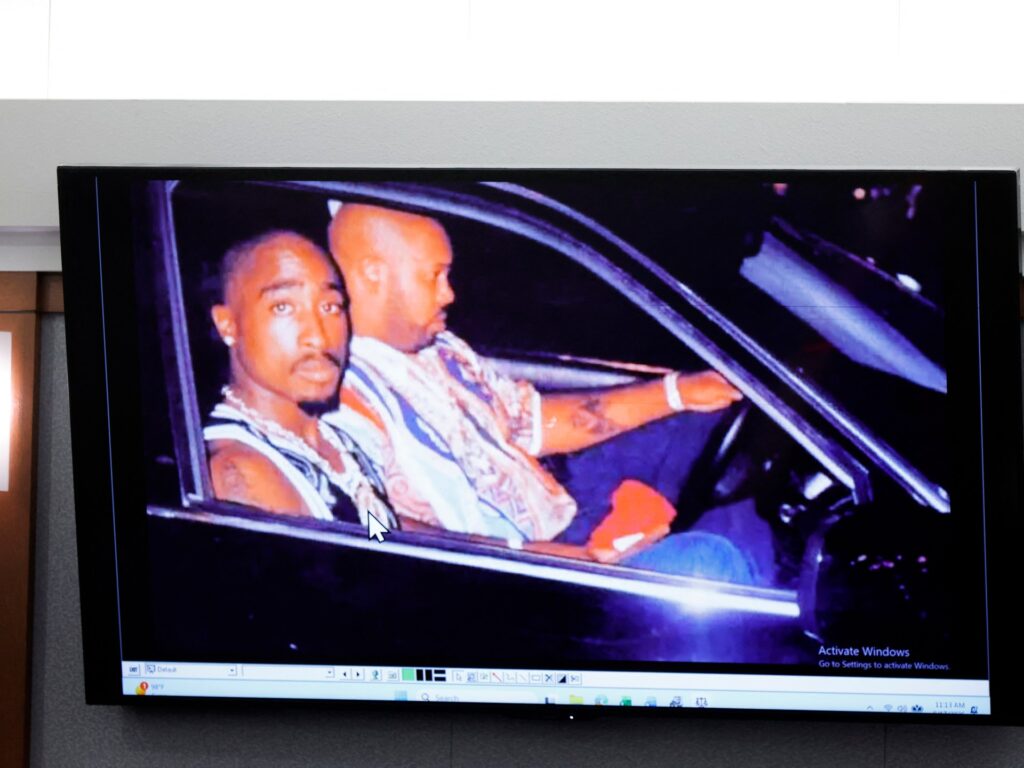
The highly anticipated trial of Duane Davis, accused of orchestrating the murder of legendary rapper Tupac Shakur, has officially commenced in the United States. Prosecutors have portrayed Davis as the “on-site commander” responsible for the fatal drive-by shooting of Tupac Shakur in 1996.
Tupac Shakur, one of the most influential figures in hip hop, was fatally shot in a drive-by shooting in Las Vegas on September 7, 1996. The rapper succumbed to his injuries six days later, on September 13.
The case has remained unsolved for decades, but recent developments have brought Duane Davis, also known as “Keffe D,” into the spotlight as the key suspect. Prosecutors argue that Davis played a pivotal role in planning and directing the shooting that resulted in Shakur’s death.
During opening statements, the prosecution asserted that Davis was not just a bystander but acted as the commanding figure at the scene of the crime. They presented evidence allegedly connecting him to the vehicle used in the shooting and communications indicating his involvement.
Defense lawyers, meanwhile, maintain Davis’s innocence, stressing the lack of conclusive evidence directly linking him to the shooting. They argue that previous investigations have been marred by inconsistencies and question the credibility of key witnesses.
The trial is expected to delve into long-standing rivalries and conflicts within the hip-hop community that may have contributed to the events leading up to the shooting. Tupac Shakur’s murder has often been linked to the East Coast-West Coast hip-hop feud prevalent during the 1990s.
Witnesses scheduled to testify include associates of Davis and individuals connected to the original investigation. Their testimonies could shed new light on the case and provide previously undisclosed information.
The trial has garnered significant media attention, underscoring the enduring fascination with Tupac Shakur and the mystery surrounding his untimely death.
Legal experts anticipate a lengthy proceeding, given the complexities and the decades-old nature of the evidence. The court will need to weigh historical testimonies alongside new forensic findings.
As the trial progresses, the United States justice system faces the challenge of resolving a decades-old crime that has deeply impacted music fans and cultural history.
Regardless of the outcome, the trial marks a crucial moment in the pursuit of justice for Tupac Shakur and may redefine public understanding of one of the most infamous unsolved murders in American pop culture.
The proceedings continue to unfold, with many eyes fixed on the courtroom as the “truth or fiction” of the accusations against Duane Davis are rigorously examined.