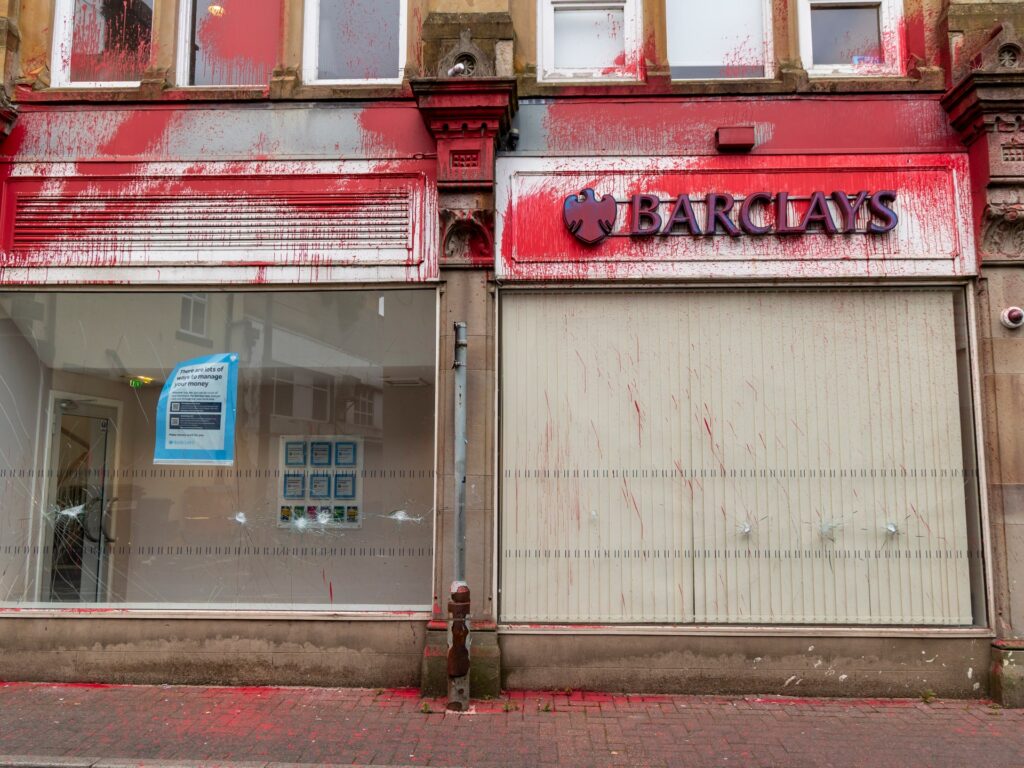
In a significant judicial decision, a judge has ruled that five Palestine Action activists who vandalised a Barclays bank branch will not be sentenced as terrorists. This ruling was delivered in relation to an incident where the activists caused damage to the bank, a move that attracted significant attention and debate. The activists, known for their protests and direct actions aimed at raising awareness about Palestinian issues, were initially charged amidst concerns from authorities about the nature of their activism. However, the judge’s ruling clarifies that while their actions involved vandalism, these do not classify them as terrorists under the law. The sentence for the activists is scheduled to be handed down in two weeks. This decision underscores the fine distinction the court draws between activism and acts of terrorism, emphasizing the importance of context and intent in legal judgments. It also highlights ongoing tensions surrounding protests linked to international conflicts and the legal responses they provoke. The ruling may set a precedent for how similar cases involving politically motivated acts of vandalism are dealt with in the future. Palestine Action and their supporters view this ruling as a vindication of their right to protest and a challenge to overzealous legal interpretations. Barclays Bank has not commented extensively on the ruling but has reiterated its commitment to security and lawful operations. As the sentencing date approaches, legal experts and activists alike are closely watching the developments, which could have wider implications for activism and civil disobedience cases in the UK and beyond.