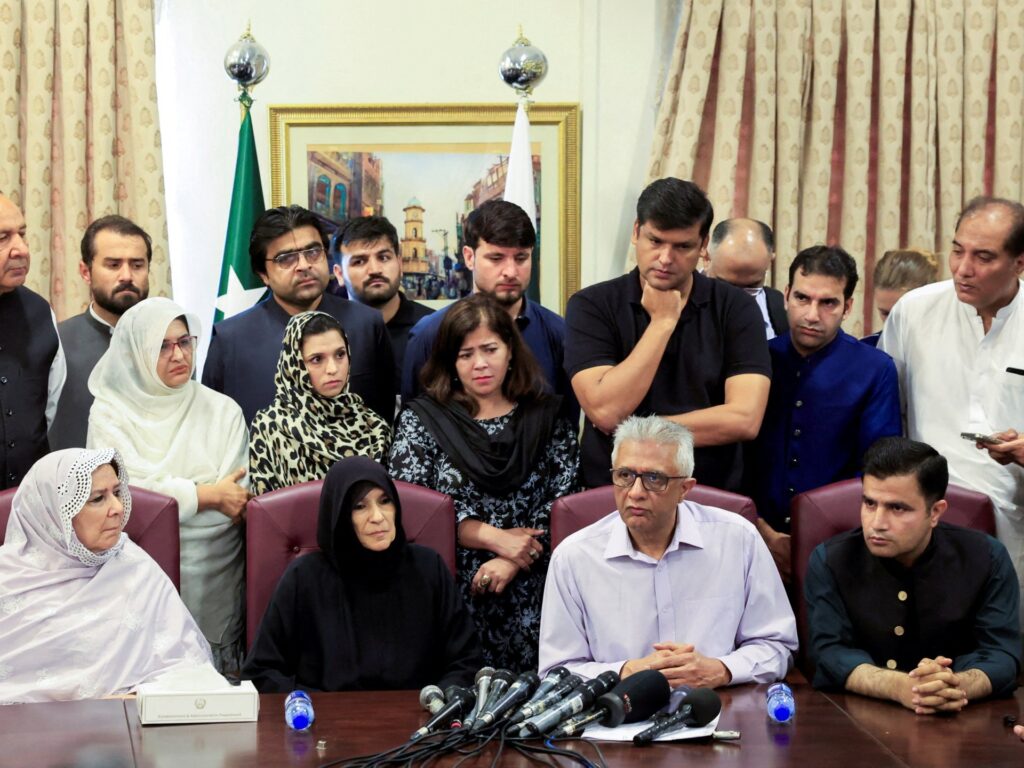
In a tense and chaotic episode that has drawn significant public attention, the family of Pakistan’s former Prime Minister Imran Khan has accused the government of defying hospital orders concerning his treatment and care. The incident unfolded during what Khan’s sister and personal physician described as a tumultuous and confusing night marked by conflicting reports from officials regarding Khan’s whereabouts and condition.
Imran Khan, a prominent political figure known for his leadership and ongoing political struggle, was admitted to a hospital where doctors had issued specific orders for his care and monitoring. However, according to his family, government officials acted contrary to these medical directives, exacerbating concerns for Khan’s health and safety.
Witnesses and those close to Khan recounted scenes filled with tension as government representatives appeared to challenge or disregard the hospital’s protocols. This has sparked outrage among Khan’s supporters and raised questions about the government’s intentions and respect for medical confidentiality and patient rights.
The situation was further complicated by the lack of clear communication, with officials providing contradictory explanations about Khan’s location during critical hours. Some reports indicated that he was moved without proper authorization or notification to his family and medical team, which intensified fears about his wellbeing.
Khan’s sister, who has been actively involved in his care and has publicly voiced her concerns, described the event as chaotic, emphasizing the emotional toll it has taken on their family. The personal doctor corroborated these accounts, highlighting that the deviations from standard medical orders could jeopardize Khan’s recovery.
This incident has ignited a broader discussion about the role of political interference in medical decisions, especially when it concerns high-profile patients. The opposition and political analysts have condemned the government’s actions as an attempt to control or manipulate the situation for political advantage.
Public demonstrations and statements from human rights advocates have called for transparency and adherence to medical ethics, urging the government to respect hospital orders and the rights of patients regardless of their political identity.
Meanwhile, the government has released statements denying any wrongdoing, asserting that all actions taken were in the best interest of Khan’s health and security. They have promised an investigation to clarify the circumstances and to address any miscommunication or procedural issues.
As Pakistan watches closely, the episode underscores the fragile intersection of politics and healthcare, raising critical questions about governance, respect for legal and ethical medical practices, and the treatment of former leaders amid political turmoil.
The international community and health organizations are also monitoring the situation, urging all parties to prioritize Khan’s health and to ensure that medical protocols are followed without political interference.
This ongoing saga remains a focal point of Pakistan’s political landscape, reflecting the tensions between the current government and opposition forces, and highlighting the profound challenges faced by a nation in conflict both politically and socially.