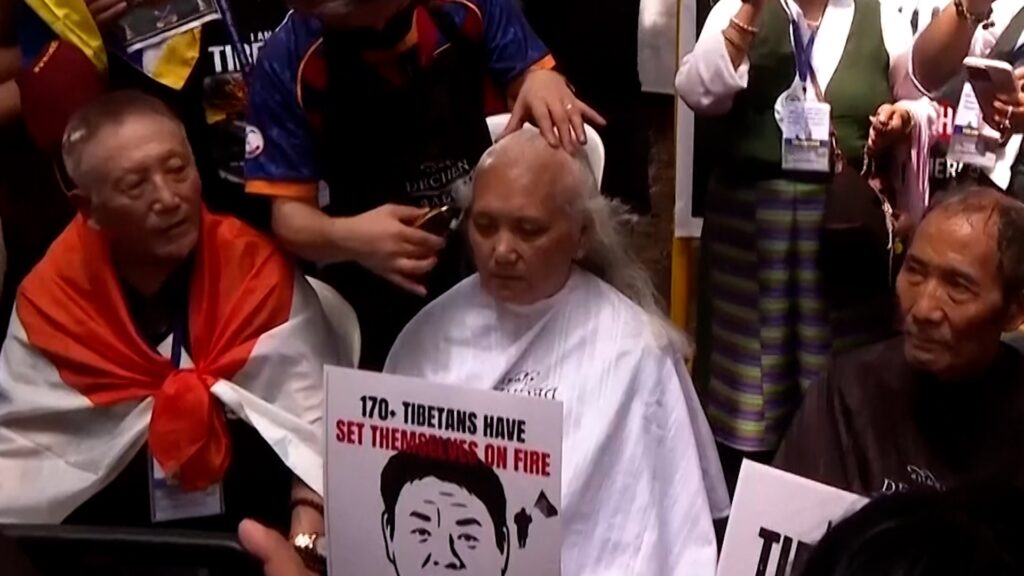
A significant protest involving hundreds of Tibetans took place in New Delhi, where participants expressed their opposition to China’s ethnic unity law by shaving their heads. This symbolic act serves as a powerful statement against Beijing’s policies, which many Tibetan exiles view as an oppressive attempt to erode their cultural identity and enforce assimilation.
The protest attracted a large number of Tibetans living in exile, who gathered to demonstrate their solidarity and resistance to the ethnic unity law, which critics argue threatens Tibet’s unique cultural and religious heritage.
Head-shaving during the protest symbolizes mourning and defiance within Tibetan culture, signifying a rejection of the forced integration policies imposed by the Chinese government. Protesters also called attention to broader issues, such as human rights violations, cultural suppression, and the lack of religious freedoms under Chinese rule.
Organizers of the demonstration emphasized the need for international awareness and support to protect Tibetans’ rights and preserve their distinct ethnic and cultural identity. They urged global communities and human rights organizations to put pressure on China to respect Tibet’s autonomy and allow freedom of cultural expression.
This protest is part of a continuing series of peaceful demonstrations by Tibetan exiles worldwide, who have consistently raised their voices against what they perceive as systemic efforts to erase their heritage.
The Chinese government, in defending the ethnic unity law, claims the legislation aims to promote harmony and integration among diverse ethnic groups within China. However, critics argue that in the context of Tibet, the policy serves as a tool for aggressive assimilation, further marginalizing Tibetans.
Observers note that the head-shaving protest is a poignant and nonviolent form of resistance, highlighting the resilience and deep-rooted identity of the Tibetan people amidst ongoing political and cultural challenges.
The protest in New Delhi serves not only as a demonstration against the ethnic unity law but also as a broader call to protect minority rights and cultural diversity within China. The event underscores the continuing struggle of the Tibetan community as it strives to maintain its traditions, language, and religious practices in the face of increasing state control.
As the international community watches, the Tibetan exiles’ act of shaving their heads remains a vivid reminder of their enduring fight for justice and recognition on the global stage. Their protest embodies a plea for dignity, respect, and the preservation of their unique heritage in an era of growing political pressures and cultural homogenization.