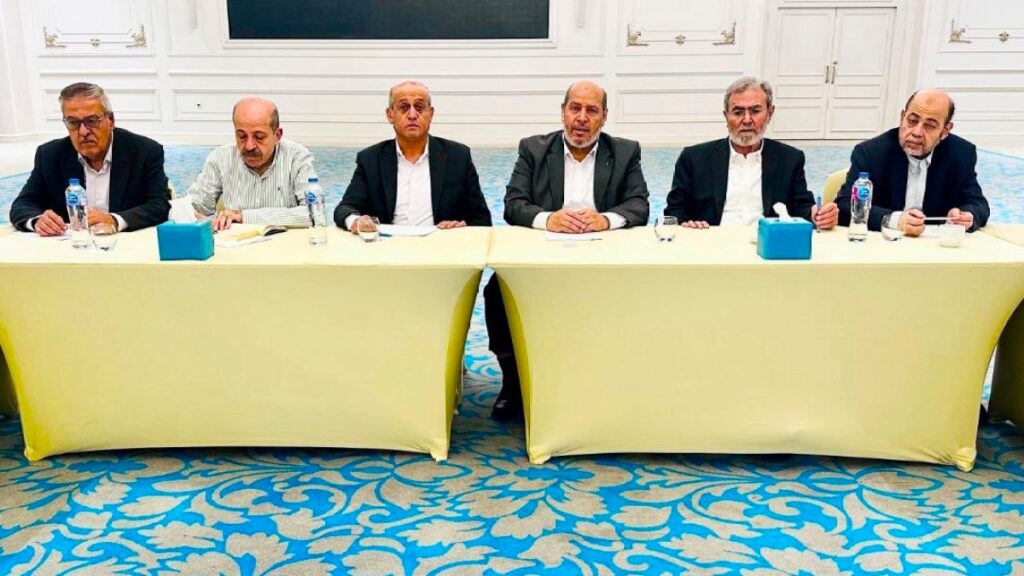
In a significant political development, Palestinian factions are actively discussing the formation of a broad alliance for the upcoming November elections. This potential coalition is drawing attention as it could dramatically reshape the political dynamics within the Palestinian territories.
Key players in these talks include Hamas and a breakaway faction from Fatah, Palestine’s historically dominant party. The two groups are considering presenting a unified electoral list, aiming to consolidate power and mount a robust challenge to the incumbent Palestinian Authority President Mahmoud Abbas.
Mahmoud Abbas, whose leadership has been a defining feature of Palestinian politics for over a decade, faces growing criticism and calls for change. The potential alliance between Hamas and the Fatah splinter faction signals a significant shift, reflecting widespread dissatisfaction with the current political establishment.
Hamas, traditionally an Islamist organization with a strong militant wing, has maintained significant influence in Gaza since its 2007 takeover. Meanwhile, Fatah, which governs parts of the West Bank, has been weakened by internal divisions and waning public support.
The unprecedented move towards cooperation suggests a strategic response to the evolving political landscape, aiming to unify various constituencies under a single banner to maximize electoral success.
This alliance could disrupt the long-standing political monopoly held by President Abbas and his loyalists. By pooling resources and voter bases, the coalition hopes to offer a credible alternative that could lead to a new political era.
The electoral competition is set against a backdrop of complex regional and international pressures, with various stakeholders closely monitoring developments. The outcome of the November elections might influence peace talks, humanitarian aid distribution, and international diplomatic relations.
Observers note that the alliance talks underscore the increasing fragmentation and realignment within Palestinian politics, shaped by decades of conflict, economic challenges, and shifting public sentiments.
For voters, the possible electoral list encompassing Hamas and the Fatah breakaway faction represents both a promise of change and a test of political unity across the Palestinian spectrum.
Should this alliance successfully materialize and perform well in the elections, it could herald a transformative period for Palestinian governance, potentially reshaping policies and approaches to longstanding issues such as security, economic development, and negotiations with Israel.
However, the path to this partnership remains fraught with challenges, including reconciling ideological differences, managing internal factional rivalries, and garnering widespread voter approval.
As the November elections approach, all eyes will remain on these factions, assessing whether their coalition can overcome obstacles and deliver a renewed vision for the Palestinian people.
Ultimately, the formation of a broad Palestinian electoral alliance could signal a pivotal moment in the region’s political history, reflecting deeper shifts in leadership aspirations and popular demands for change and stability.