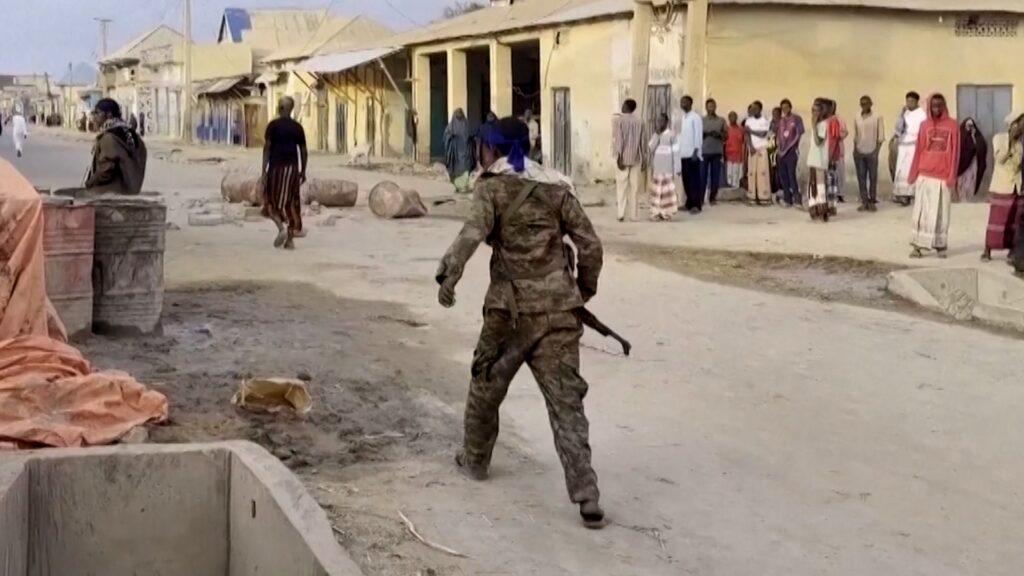
Heavy clashes erupted in Baidoa, a key city in Somalia, as federal government troops engaged in intense fighting with armed opposition groups. The violence marks a significant escalation in the ongoing struggle for control and stability within the region. Baidoa, a strategic hub in southwestern Somalia, has been a focal point of conflict due to its political and territorial importance. The confrontation began when federal forces attempted to assert control over areas held by opposition factions, leading to a fierce response from the armed groups.
The clashes have resulted in multiple casualties, though exact figures are yet to be confirmed as the situation on the ground remains volatile. Reports from local sources indicate that the fighting has disrupted daily life for residents, forcing many to flee their homes in search of safety. Humanitarian agencies have expressed concern over the rising violence, warning that continued conflict could exacerbate the already dire humanitarian conditions in the area.
The opposition groups involved in the clashes are part of a broader movement challenging the federal government’s authority and policies in the region. The federal government, on the other hand, insists its operations are aimed at restoring order and combating insurgency to ensure peace and stability.
Baidoa’s strategic significance lies in its role as the capital of the South West State and its proximity to key trade routes and agricultural resources. Control over the city offers not only political leverage but also economic advantages. This has made it a contested hotspot among Somalia’s fragmented political landscape.
The international community has called for restraint and dialogue to prevent further deterioration of the situation. United Nations officials and regional organizations have urged both sides to prioritize negotiation and peaceful resolution over armed conflict. Efforts to mediate between the federal government and opposition groups are underway, with the aim of achieving a sustainable ceasefire and paving the way for political dialogue.
This latest outbreak of violence underscores the challenges Somalia faces in its path toward national reconciliation and stability. Persistent clashes between government forces and opposition factions continue to hinder the country’s progress, affecting not only security but also development and humanitarian efforts.
The residents of Baidoa and surrounding areas bear the brunt of the conflict, facing increased insecurity and limited access to essential services. The prolonged fighting risks worsening food insecurity, displacement, and the overall humanitarian crisis in the region.
Looking ahead, the priority remains to de-escalate tensions and foster inclusive political processes that address the root causes of conflict. Strengthening governance, enhancing security cooperation, and supporting community resilience are crucial steps toward lasting peace.
In conclusion, the clashes in Baidoa represent a critical moment in Somalia’s ongoing struggle with internal conflict. Concerted efforts from all stakeholders, including local leaders, the federal government, opposition groups, and the international community, are essential to break the cycle of violence and build a stable future for the Somali people.