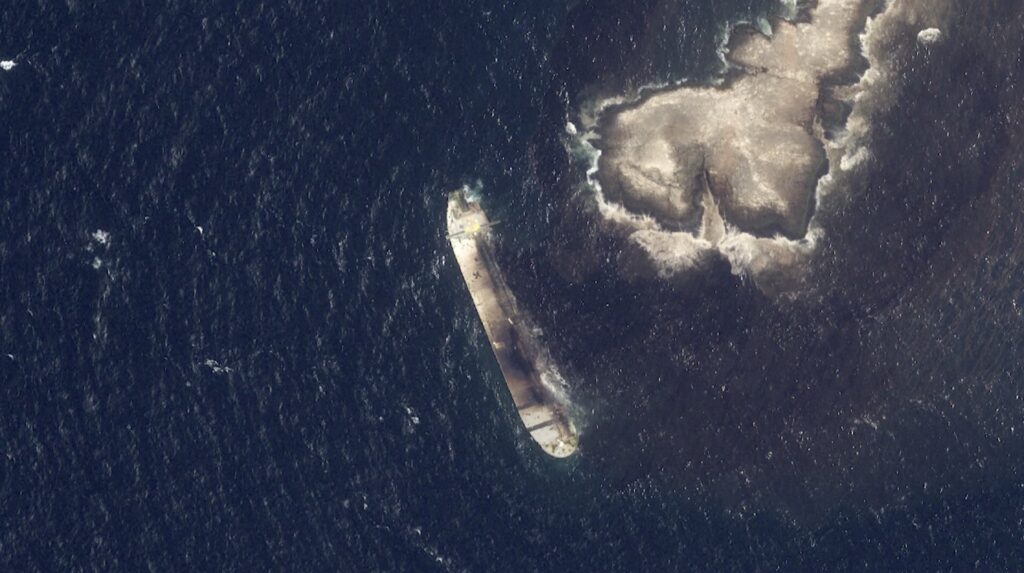
A significant environmental concern has arisen as an oil slick originating from the tanker Caroline Bezengi has reached Oman’s coastline. The Caroline Bezengi, a vessel carrying sanctioned Russian crude oil, ran aground several weeks ago, leading to the spill of oil into surrounding waters. This incident marks a troubling development in ongoing issues surrounding maritime transport of sanctioned commodities.
The tanker, reportedly carrying Russian crude oil, was involved in an accident that caused it to run aground. Since then, oil has leaked from the ship, spreading across the sea and eventually reaching the shores of Oman. Local authorities and environmental agencies have been monitoring the situation closely to assess the extent of the contamination and its impact on marine and coastal ecosystems.
Oman’s coastline, known for its diverse marine life and ecosystems, now faces the threat of pollution that could have long-lasting detrimental effects on wildlife and local fisheries. The oil slick poses risks not only to marine organisms but also to people who rely on the sea for their livelihoods and food.
The incident underscores the complexities of international sanctions and maritime shipping, especially when vessels carrying prohibited or sanctioned cargoes are involved in accidents. The Caroline Bezengi was reportedly transporting Russian crude oil that is under sanctions due to geopolitical conflicts, adding a layer of political and economic tension to the environmental disaster.
Authorities are coordinating cleanup and mitigation efforts to contain the oil spill and reduce the impact on the environment. Efforts include deploying containment booms, skimming oil from the water surface, and mobilizing specialized response teams to affected coastal areas.
Environmental experts warn that such spills are challenging to manage and often lead to long-term damage to marine ecosystems. Oil contamination can affect the reproductive cycles of marine species, pollute feeding grounds, and disrupt the overall health of the ocean environment.
The event also draws attention to the risks associated with shipping routes used by tankers carrying sanctioned oil, as well as the importance of adherence to safety protocols to prevent accidents. The grounding of Caroline Bezengi may prompt reviews of shipping regulations and emergency response strategies in the region.
Economic repercussions may follow as well, with potential impacts on Oman’s fishing industry and tourism sector. Cleanup costs and restoration efforts are likely to be substantial, requiring cooperation between governmental bodies, the international community, and the companies involved.
In summary, the oil slick from the Caroline Bezengi has reached Oman’s shores, raising environmental alarms due to the tanker carrying sanctioned Russian crude that ran aground weeks earlier. The incident highlights the intersection of environmental hazards, international sanctions, and maritime safety, emphasizing the importance of rapid response and preventive measures to protect vulnerable coastal regions.