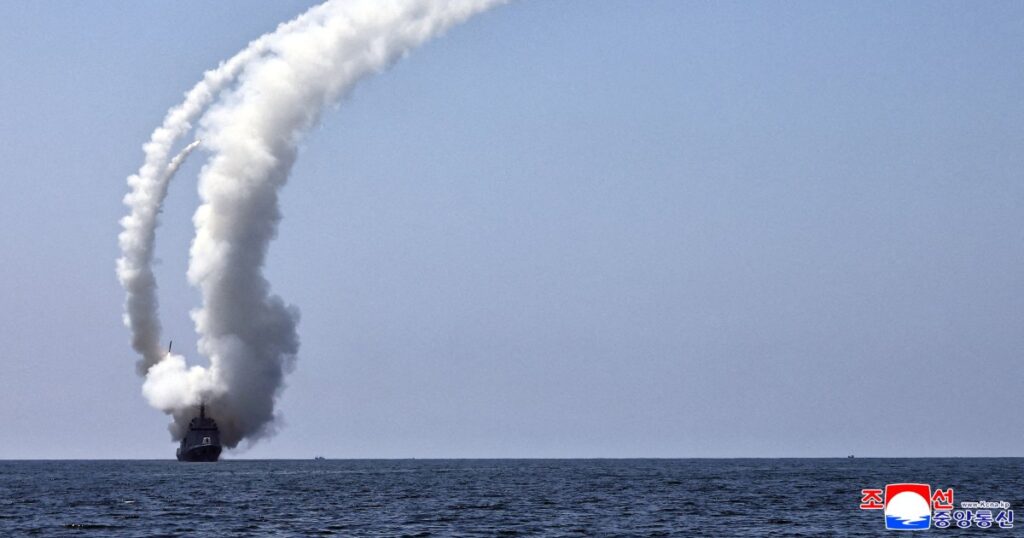
In a move that has once again raised tensions in the region, North Korea recently fired a missile just days before the scheduled US-South Korea military drills. This provocative action reflects Pyongyang’s long-standing opposition to these joint exercises, which it consistently labels as a ‘rehearsal for invasion.’
The US-South Korea drills are annual military exercises designed to enhance readiness and interoperability between the two allied forces. From the perspective of North Korea, however, these drills are viewed as a direct threat to its sovereignty and an imminent preparation for potential military aggression.
North Korea’s missile launch is a clear demonstration of its displeasure and serves as a signal meant to dissuade the continuation of these exercises. This act of defiance is consistent with past behavior where Pyongyang has conducted missile tests or other military activities shortly before or during the joint drills.
Experts suggest that by firing the missile, North Korea aims to showcase its military capabilities, reminding both the US and South Korea of its readiness to respond aggressively to perceived provocations. This strategy not only asserts Pyongyang’s stance but also seeks to influence diplomatic negotiations by creating a sense of urgency and tension.
The international community watches these developments with concern, recognizing that such actions exacerbate instability on the Korean Peninsula. While the US and South Korea maintain that the exercises are defensive and routine, North Korea’s response highlights the fragile nature of peace and security in the region.
Diplomatic efforts to reduce tensions have been ongoing but face significant challenges due to the opposing narratives and mutual distrust between North Korea and the US-South Korea alliance. The missile test may further complicate these efforts, possibly leading to increased sanctions or calls for renewed talks under different terms.
Ultimately, North Korea’s missile launch ahead of the US-South Korea drills underscores the complex geopolitical dynamics in East Asia. It reflects an enduring cycle of military signaling and counter-signaling that continues to shape the security landscape of the peninsula. As these drills proceed, all parties remain vigilant, aware that each action carries implications that extend far beyond the immediate moment.