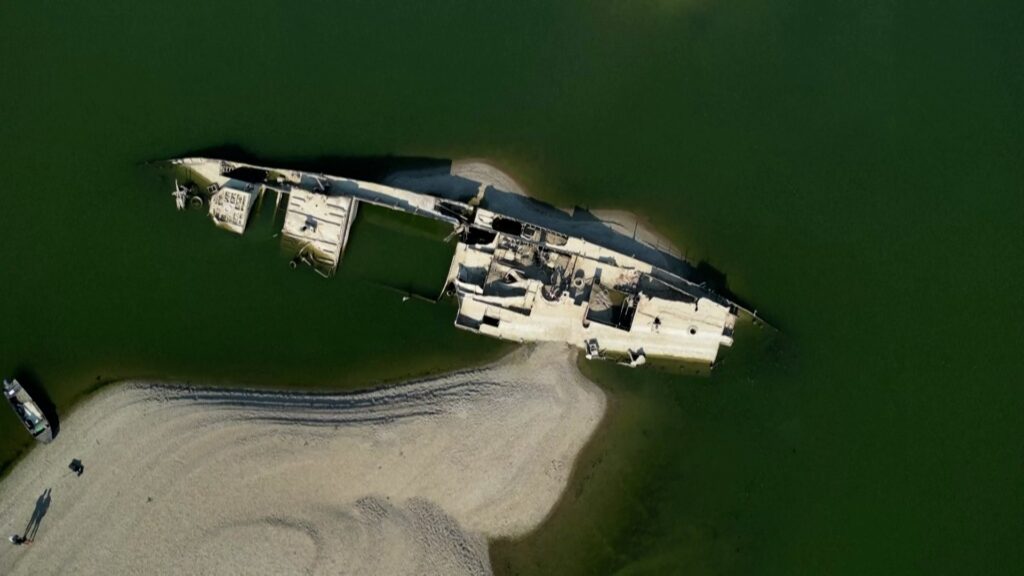
Record-low water levels on the Danube near Prahovo, Serbia, have unveiled the submerged wrecks of dozens of Nazi-era warships, long hidden beneath the river’s surface. The drought-induced decline in water levels has revealed these historic remnants, offering a stark reminder of World War II’s impact on the region.
The Danube River, Europe’s second-longest river, flows through multiple countries, playing a vital role in commerce, culture, and history. Near Prahovo, Serbia, the drought has exposed several sunken vessels once used by Nazi forces. These ships, forgotten for decades, now serve as poignant artifacts of a turbulent past.
Historically, the Danube was a strategic military route during World War II, with Nazi Germany utilizing the river for transport and defense operations. Numerous warships were sunk during the conflict, either through battles or scuttling to prevent capture. Over time, sediment and water flow concealed these shipwrecks, preserving them underwater.
The recent drought conditions have led to historically low water levels, which have uncovered parts of these wrecks along the riverbanks. Archaeologists and historians are now able to study these sites in unprecedented detail, gaining insights into wartime naval technology and the conditions faced by crews.
Local authorities have expressed concerns about the preservation of these wrecks, as exposure to air and human interference could accelerate their deterioration. Efforts are underway to document and protect these historical sites to maintain their integrity for future research and education.
The exposure of the Nazi-era warships has also drawn attention from the global historical community, prompting discussions about the Danube’s role in World War II and the importance of preserving underwater cultural heritage.
Moreover, the drought highlights broader environmental challenges facing the Danube and surrounding regions, raising awareness about climate change and its impact on waterways and historical artifacts.
As water levels are expected to fluctuate with changing weather patterns, the opportunity to study these wrecks may be brief. Experts urge the public to respect these sites and support preservation efforts to safeguard this unique window into history.
This rare exposure of World War II relics beneath the Danube serves as a powerful reminder of the enduring legacy of conflict and the passage of time on Europe’s historic waterways.