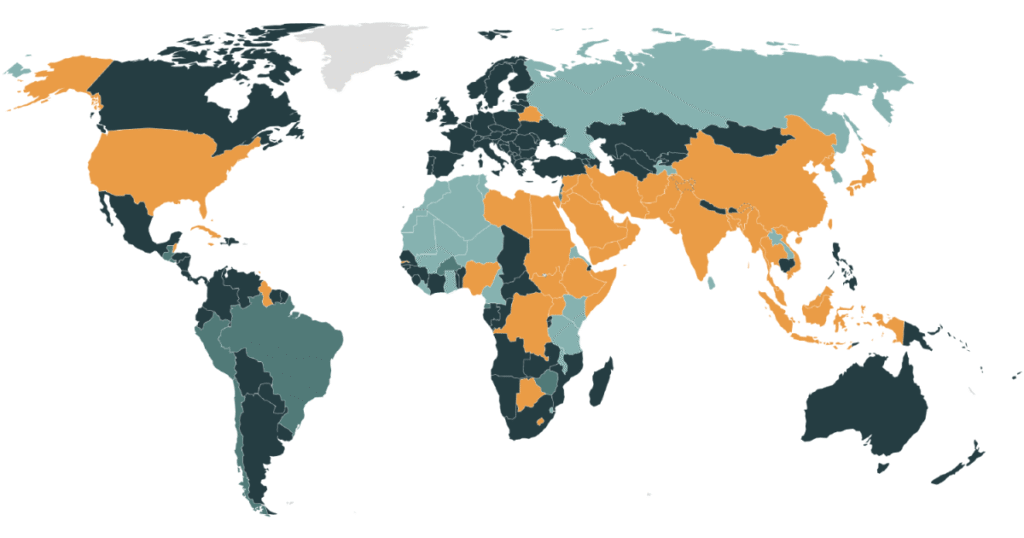
In a significant move towards human rights reform, Lebanon has officially ended executions, joining a growing number of countries worldwide that have abolished the death penalty. According to Amnesty International, nearly three-quarters of the global population now live in countries that have abolished capital punishment either in law or in practice.
The death penalty, once a common form of judicial punishment, has seen a steep decline in its application over recent decades. This trend reflects a global shift towards more humane and rehabilitative forms of justice, emphasizing the sanctity of human life and the possibility of wrongful convictions.
Lebanon’s decision marks a pivotal moment not only for the country but also for the Middle East, a region where capital punishment has historically been more prevalent. This step aligns Lebanon with many other nations that have moved away from executions, demonstrating a regional shift towards re-evaluating the justice system and human rights standards.
Globally, the abolition of the death penalty has been driven by numerous factors, including international pressure, legal challenges, ethical considerations, and changing public opinions. The United Nations has played a crucial role in advocating for the eradication of capital punishment, promoting moratoriums and encouraging member states to abolish it.
In 2026, the death penalty still exists in a limited number of countries, primarily for serious crimes such as murder, terrorism, war crimes, and in some places, drug trafficking. Notable countries that continue to enforce capital punishment include the United States, China, Iran, Saudi Arabia, and Japan.
China remains the country with the highest number of executions annually, though exact figures are often state secrets. The United States, despite significant opposition and some states abolishing it, still carries out federal and state executions. Iran and Saudi Arabia are known for their frequent use of the death penalty, often for crimes punishable by beheading or hanging.
In some regions, the death penalty is retained in law but seldom applied, effectively creating a moratorium in practice. For example, many countries in Africa and Latin America maintain the death penalty legally but have not executed anyone for years.
Human rights organizations continue to campaign for the universal abolition of the death penalty, arguing that it is an irreversible and inhumane punishment that does not deter crime more effectively than life imprisonment.
As Lebanon moves forward with its new legal stance, it sets an important precedent and contributes to the global momentum towards ending capital punishment. The hope is that more countries will follow suit, promoting judicial systems based on justice and human dignity rather than retribution.
Overall, the global landscape of the death penalty is undergoing rapid change, with an increasing number of nations embracing the abolition trend. For those still implementing capital punishment, the international community continues to encourage reforms that protect human rights and uphold the values of modern justice.