In a dramatic and unprecedented incident, an opposition Member of Parliament (MP) threw eggs at Kosovo’s acting Prime Minister, Albin Kurti, during a parliamentary session. The event has shocked the political community and highlighted the rising tensions within the nation’s legislative body.
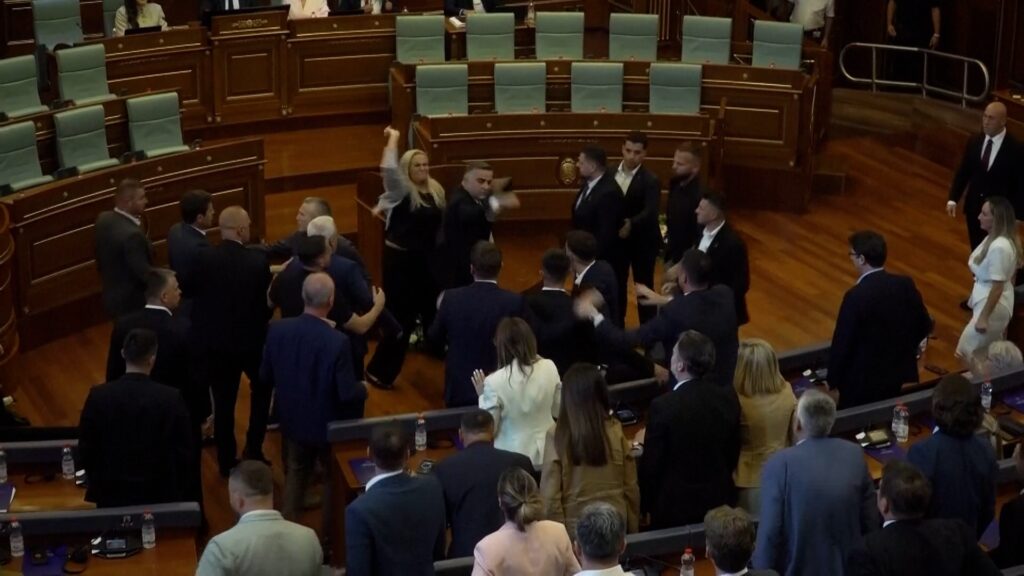
The act took place in the midst of heated discussions when the MP, whose identity has not been publicly disclosed, suddenly flung eggs towards Prime Minister Kurti. The eggs struck the Prime Minister, disrupting the session and causing an uproar among the members present.
This confrontation underscores the deep divisions and hostility that currently characterize Kosovo’s political landscape. Observers note that the opposition has been increasingly vocal and confrontational in recent months, criticizing Kurti’s policies and governance style.
The Prime Minister, known for his firm stance on national issues, was reportedly unharmed but visibly shaken by the assault. Security personnel quickly intervened to restore order and remove the assailant from the chamber.
Political analysts suggest that this physical act of protest reflects the high stakes and intense emotions involved in Kosovo’s ongoing political struggles. The opposition’s frustrations stem from a range of issues, including economic challenges, government transparency, and foreign policy decisions.
Following the incident, several opposition members defended the lawmaker’s actions as a symbol of protest against what they describe as repressive policies and insufficient dialogue from the ruling party. Meanwhile, members of Kurti’s party condemned the assault as a dangerous breach of parliamentary decorum and an attack on democratic processes.
The parliamentary session was adjourned shortly after the incident, with calls for calm and a return to constructive debate. Prime Minister Kurti issued a statement expressing his commitment to continuing dialogue and refusing to be intimidated by such acts.
The incident has drawn condemnation from international observers who emphasize the importance of preserving democratic norms and decorum in parliamentary settings. It also raises concerns about the stability and functionality of Kosovo’s political institutions.
Legal proceedings against the opposition MP are expected to follow, as the government seeks to address the breach of protocol and ensure accountability.
This eggs-throwing episode is a stark reminder of the volatile political climate in Kosovo, where frustrations and disagreements sometimes spill over into physical confrontations. It highlights the challenges facing the country as it strives to maintain democratic governance amid internal conflicts.
As Kosovo navigates these turbulent times, the incident calls for renewed efforts towards reconciliation, dialogue, and respect for democratic principles among all political factions. The political future of Kosovo will depend greatly on the ability of its leaders to manage conflicts constructively and uphold the rule of law in their parliamentary conduct.