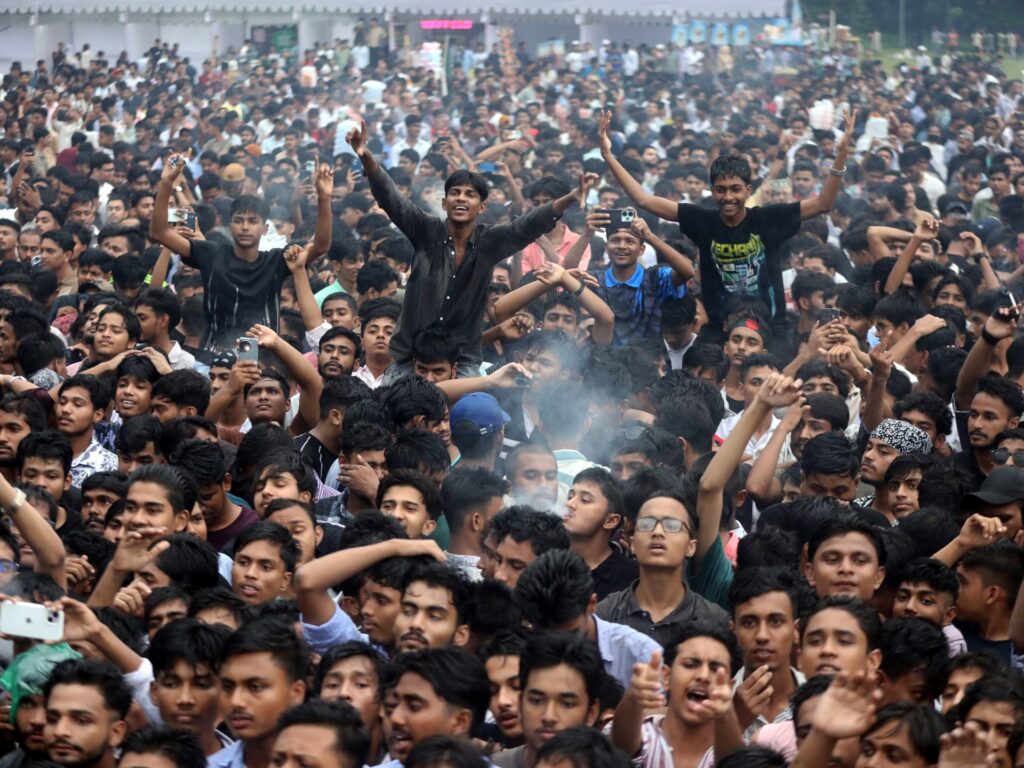
In a striking development that underscores the intense political atmosphere in Bangladesh, Sheikh Hasina, the leader of the Awami League, has declared her intention to return to the country despite currently living in exile in India. Her planned return comes amid a backdrop of severe political conflict and judicial actions that have seen her sentenced to death in connection to a crackdown on protests that occurred in 2024.
Sheikh Hasina’s political journey has been marked by fierce loyalty as well as staunch opposition. Her supporters view her as a champion of democracy and a stabilizing force in Bangladesh, while critics accuse her administration of authoritarian practices, particularly pointing to the violent suppression of dissent.
The 2024 protests, which were met with severe police action, have been a flashpoint in Bangladesh’s contemporary political landscape. Following these events, Sheikh Hasina was tried and sentenced to death in absentia. This verdict has sent shockwaves through the political community, raising serious questions about the implications of her return on national stability.
Political analysts are deeply divided regarding the potential outcomes of her return. Some predict that it may energize her supporters and intensify political unrest, while others believe it could catalyze new dialogues between opposing factions. The government’s response to her announcement remains cautiously measured, balancing the need for law enforcement with concerns over increased political tensions.
International observers have also been closely monitoring the situation, with many urging all parties to pursue peaceful solutions and uphold democratic principles. The stakes are high, as Bangladesh stands at a crossroads between consolidating democratic gains and descending further into political instability.
Sheikh Hasina’s bold move to come back could redefine the country’s political narrative. It emphasizes the enduring divisions within Bangladeshi society and the unresolved issues that continue to challenge its governance structures. How Bangladesh will react—whether with acceptance, resistance, or renewed conflict—remains to be seen as the nation braces itself for a pivotal moment in its political history.