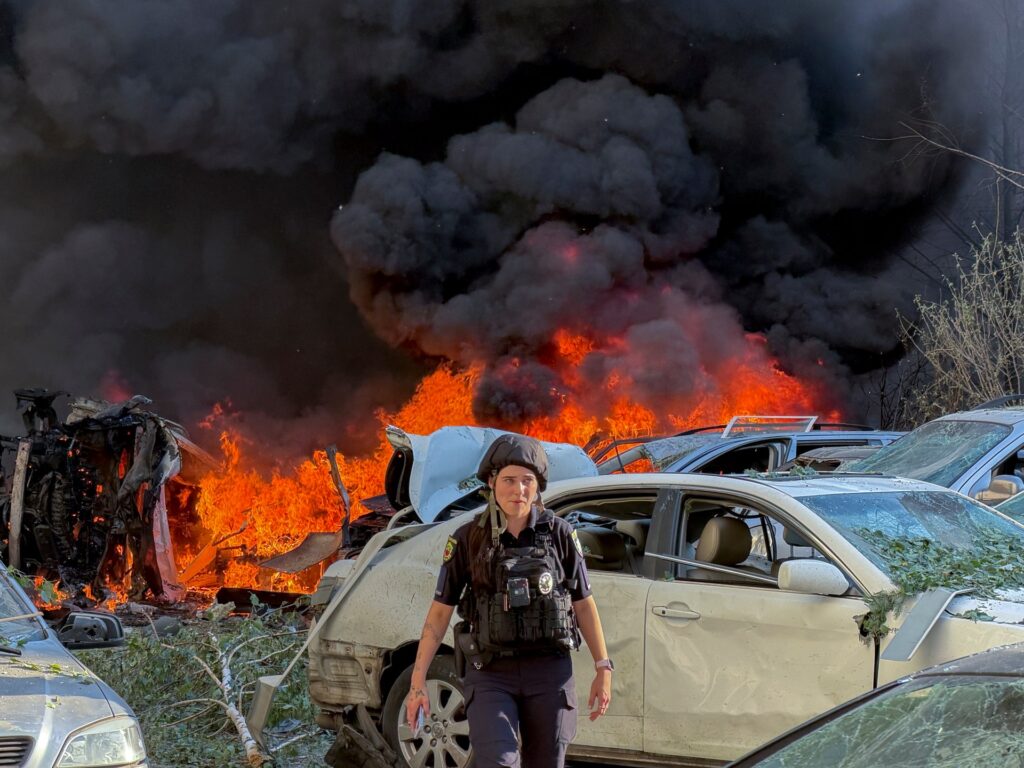
The ongoing conflict between Russia and Ukraine, now in its fifth year, continues to escalate with no signs of abating. Recent exchanges of heavy artillery and missile strikes have resulted in the deaths of at least 17 individuals, underscoring the brutal reality of this prolonged war.
The fighting has intensified in various hotspots along the front lines, with both sides accusing each other of initiating attacks. Civilians have once again borne the brunt of the violence, leading to mounting casualties and widespread destruction of infrastructure.
Military reports indicate a significant increase in the use of artillery, rockets, and drone strikes, indicating a shift towards more aggressive posturing by both nations. The exchange of fire has disrupted daily life for thousands, forcing many to seek shelter or flee their homes.
International observers and humanitarian organizations have expressed deep concern over the escalating conflict and the deteriorating humanitarian situation. Calls for ceasefire and renewed peace talks have been repeatedly issued but have yet to yield tangible results.
The broader geopolitical implications of the conflict remain complex, as Western nations continue to support Ukraine with military aid, while Russia maintains its stance on sovereignty and security interests. The war has not only led to a tragic loss of life but has also destabilized the region, affecting global economic and security landscapes.
As the conflict drags into another year, the imperative for diplomatic solutions grows more urgent. Without a concerted push for negotiations, the cycle of violence looks set to continue, threatening further loss of life and regional instability.
The international community remains watchful, hoping for a breakthrough that could pave the way for lasting peace. For now, civilians caught in the crossfire face an uncertain future amidst the relentless exchange of attacks.