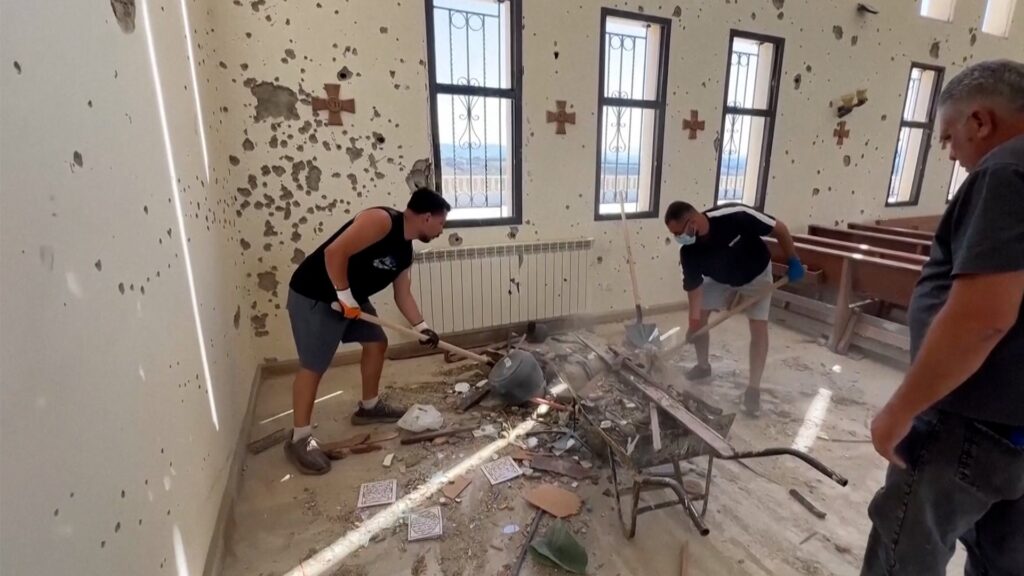
In the heart of Lebanon’s Zawtar al-Gharbiyeh village, a remarkable story of unity and resilience is unfolding. Local volunteers from diverse backgrounds have come together to rebuild a Catholic monastery that was severely damaged by war. This interfaith initiative highlights the strength of communal solidarity and the shared commitment to preserving Lebanon’s rich religious heritage.
The Catholic monastery, a symbol of faith and history for the region, had suffered significant destruction during conflicts, leaving it in ruins and cutting off a spiritual sanctuary for many. Recognizing the profound impact of this loss, a coalition of volunteers—comprising Christians, Muslims, and members of other faiths—mobilized to restore the sacred site.
The reconstruction project is not just about bricks and mortar; it represents a powerful message of peace and coexistence in a region often marked by sectarian strife. Volunteers have dedicated countless hours to clearing debris, repairing structural damage, and restoring the intricate artistic elements that adorn the monastery’s walls.
Community leaders have praised the effort, emphasizing how the project fosters understanding and collaboration across religious divides. By working side by side, the volunteers are building more than a monastery—they are building bridges of trust and friendship.
Funding for the restoration has come from local donations and international support, reflecting a broad base of encouragement for the project. The endeavor has also inspired educational programs aimed at promoting dialogue and cultural exchange among Lebanon’s diverse communities.
As the monastery gradually regains its former glory, it is poised to reopen as a vibrant center for worship and community gatherings. The volunteers’ dedication serves as a beacon of hope, illustrating that even in the aftermath of conflict, shared humanity and faith can pave the way for healing and renewal.
This ongoing restoration is a testament to Lebanon’s enduring spirit, where interfaith cooperation stands as a cornerstone in rebuilding not only physical structures but also the social fabric that unites its people. The story of Zawtar al-Gharbiyeh’s monastery reminds us that through collective effort, peace and reconciliation are attainable goals, worthy of pursuit and celebration.