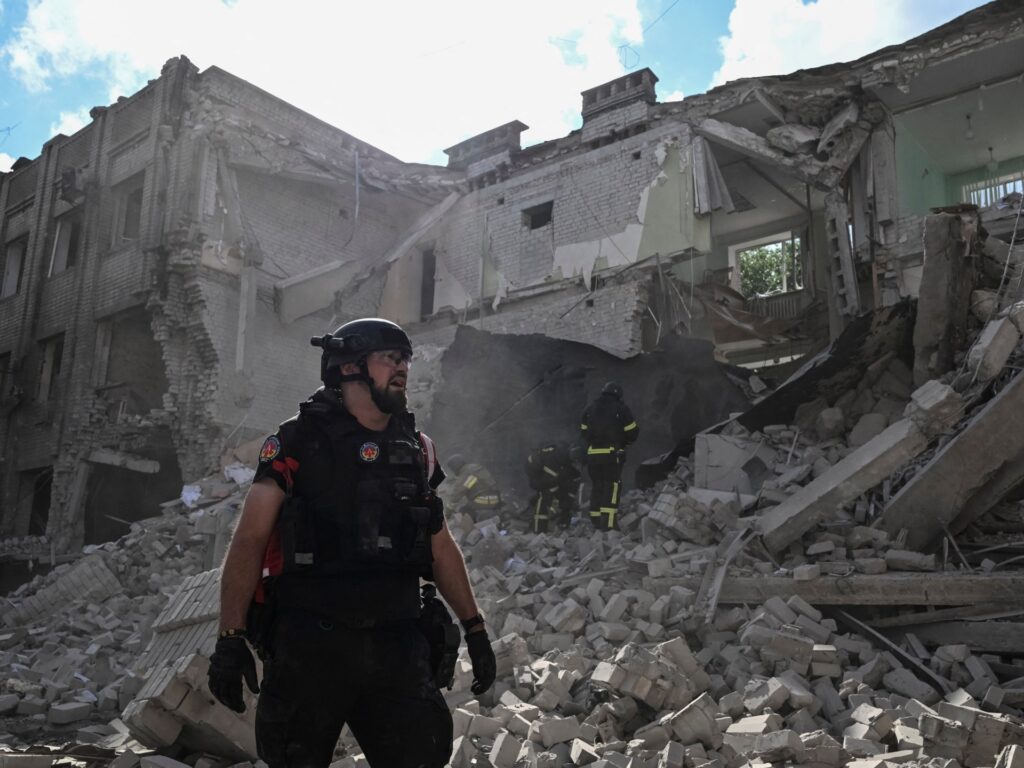
In a series of escalating conflicts, recent Russian attacks have tragically resulted in the deaths of five individuals, intensifying the already severe situation in the region. Ukrainian officials have confirmed that a deadly strike on the city of Kramatorsk led to the loss of four lives, highlighting the continuing violence and instability.
Simultaneously, another fatal strike was reported in Zaporizhzhia, where one person was killed during the assault. These incidents underline the persistent conflict between Russian forces and Ukraine, with each side carrying out operations that significantly impact civilian areas and infrastructure.
The Ukrainian government continues to focus its military efforts on targeting critical Russian oil infrastructure, aiming to disrupt supply lines and weaken the enemy’s operational capabilities. This strategic choice emphasizes the importance of energy resources in the broader context of the ongoing conflict.
However, the attacks on civilian centers such as Kramatorsk and Zaporizhzhia raise serious concerns about the humanitarian impact of the conflict, as innocent lives are caught in the crossfire. Both domestic and international entities have called for restraint and greater protection of non-combatants.
The situation remains volatile, with neither side showing signs of backing down. The international community watches closely, advocating for dialogue and peaceful resolutions while condemning attacks that result in civilian casualties.
As the conflict continues, the focus is not only on military gains but also on the broader consequences for regional stability, economic conditions, and human rights. The dual reality of ongoing strikes and counterstrikes reflects the complexity and urgency of achieving a sustainable peace in the region.