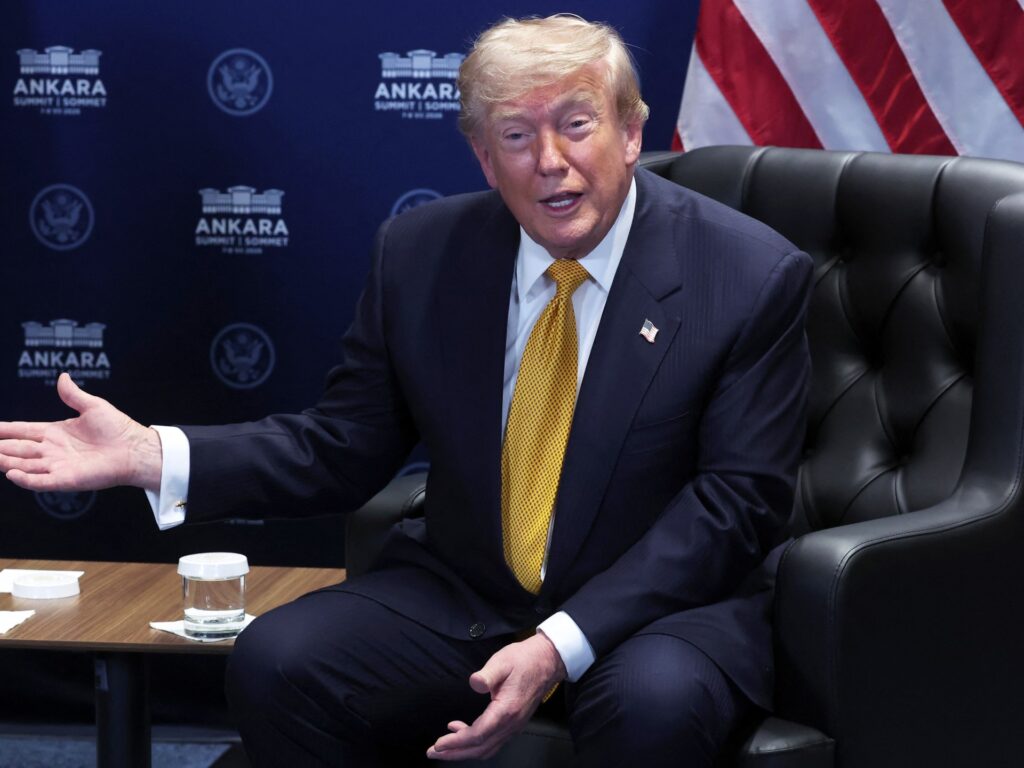
In a significant move that has stirred political discussions and concerns about the future of election oversight, former President Donald Trump has removed the last remaining members of the independent US election commission. This federal body, which plays a crucial role in overseeing election integrity and security, now stands entirely vacant following these dismissals.
The US election commission was initially established to act as a nonpartisan entity dedicated to enhancing the security and reliability of federal elections. Its responsibilities included setting guidelines, providing resources, and assisting states in maintaining the integrity of voter registration and voting processes.
Trump’s decision to remove the final members of this commission comes amid his broader push for changes to US voting rules. Critics argue that eliminating the commission undermines efforts to ensure transparent and fair elections, while supporters claim it is a step towards reexamining and possibly reforming election procedures to prevent fraud.
The commission’s vacancy raises questions about the federal government’s current capacity to uniformly address election-related issues and support states in electoral processes, especially ahead of upcoming election cycles. Election integrity advocates express concern that without such an oversight body, the system may be more vulnerable to inconsistencies and misinformation.
This development also reflects the ongoing political debates in the US regarding voting rights, election security, and the balance between federal and state powers in administering elections. Various stakeholders, including lawmakers, advocacy groups, and election officials, are closely monitoring the situation, with discussions intensifying over how to best safeguard democratic processes in the country.
The removal of the commission members marks a pivotal moment in the landscape of US election administration. It signals a potential shift in the approach to election oversight and may prompt legislative and policy responses aimed at redefining the mechanisms for ensuring electoral integrity.
As the federal election commission lies vacant, the responsibility for election security and fairness will increasingly fall to individual states and their respective election authorities. This change could lead to a fragmented system with varying standards and protections across state lines.
Moving forward, it is imperative for policymakers and citizens alike to consider the implications of these actions on the democratic process. Ensuring free, fair, and secure elections remains a foundational element of American democracy, and the latest developments underscore the ongoing challenges and debates surrounding this goal.