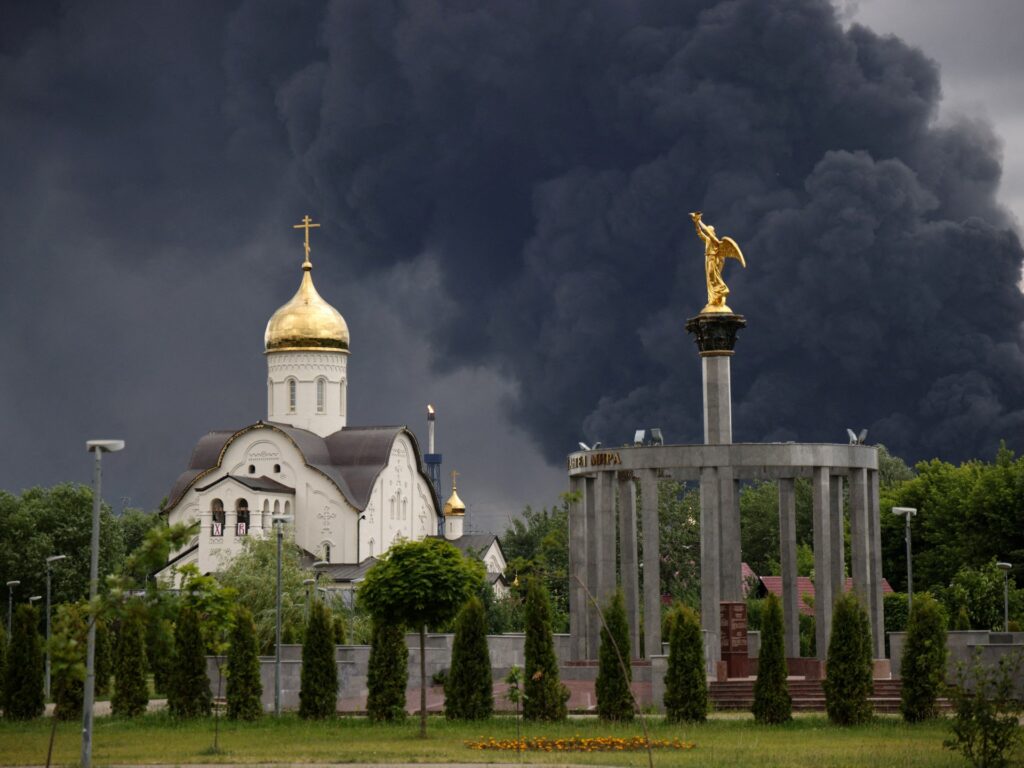
The ongoing Russia-Ukraine conflict has started to deeply affect life in Moscow, bringing the war’s consequences directly to the Russian capital. Residents are grappling with petrol shortages, a situation exacerbated by persistent Ukrainian strikes targeting Russian oil and weapons infrastructure. These strikes have disrupted supply chains and refinery operations, leading to reduced fuel availability on the ground.
In recent weeks, Ukrainian forces have stepped up their efforts to damage oil depots, pipelines, and ammunition factories deep inside Russian territory. This strategic targeting aims to weaken Russia’s logistical support and war machinery by limiting access to essential resources. The intensifying conflict has also been marked by unusual phenomena such as “oil rain,” where petroleum residues reportedly fell following damaged oil storage explosions, further stressing environmental and public health concerns in Moscow.
This increased Ukrainian offensive effort comes alongside successful diplomatic moves, as Ukraine has been garnering significant aid from Western allies. Financial, military, and humanitarian assistance from European nations and the United States is bolstering Ukraine’s capacity to continue its counter-strikes.
Additionally, Ukraine has initiated talks with the European Union regarding future membership and support frameworks, signaling its determination to integrate closer with the West. These political developments indicate a shift in the regional balance and heightened international involvement in the conflict.
For the people of Moscow, the tangible impacts of the war—manifesting as fuel scarcity and environmental hazards—have raised awareness and concern about the broader human and economic costs. Local businesses dependent on fuel supplies face operational challenges, while households contend with higher prices and restricted availability of petrol.
Experts warn that if the strikes on oil and weapons infrastructure continue unabated, Russia could experience further economic strain and logistical hurdles, potentially influencing the overall course of the war. Meanwhile, Ukrainian advances with external aid highlight the importance of sustained international support for Kyiv.
The Russia-Ukraine war, once perceived as distant by many Russian citizens, is now an undeniable reality. Its ripple effects within Moscow underscore the interconnectedness of the conflict zones and home fronts, reminding the world that wars can reach far beyond the battlefields themselves.