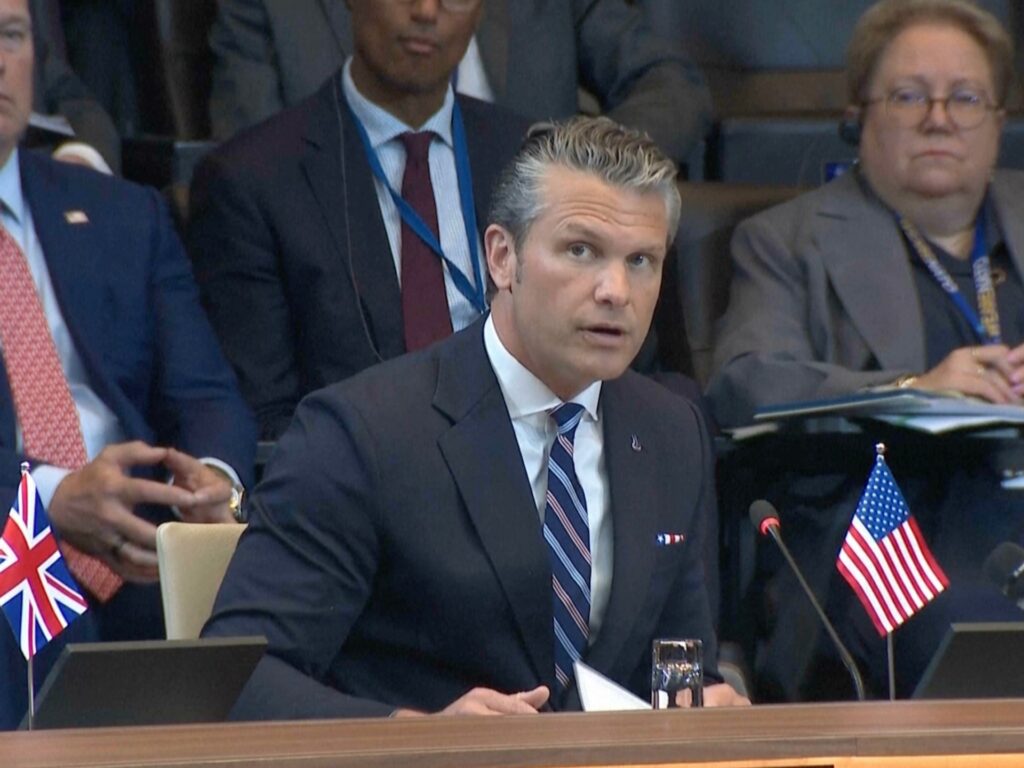
During a recent roundtable meeting, Pete Hegseth delivered a sharp critique of NATO allies, expressing strong dissatisfaction with their current level of commitment and cooperation. Hegseth, a prominent commentator and former military officer, highlighted what he perceives as a lack of solidarity and support among the alliance members, especially in the context of ongoing geopolitical tensions.
Hegseth’s remarks centered around the readiness and financial contributions of various NATO countries, pointing out that some member states have been slow to meet agreed-upon defense spending targets. This issue, he argued, undermines the collective security objective that NATO strives to maintain.
He specifically called out key NATO members for not stepping up adequately in the face of increasing threats, emphasizing that the United States has disproportionately shouldered the burden of defense and security in the alliance. According to Hegseth, this imbalance threatens the unity and effectiveness of NATO.
The roundtable discussion also covered the strategic challenges posed by adversaries such as Russia and China. Hegseth stressed the need for a more cohesive and decisive response from the alliance, warning that internal divisions could embolden rivals and compromise global stability.
Furthermore, Hegseth urged NATO allies to enhance their military capabilities and increase interoperability to respond swiftly to emerging threats. He highlighted recent conflicts and crises as examples where a united front and robust defense posture are crucial.
His comments sparked a range of reactions, with some agreeing on the necessity for stronger commitment and others urging caution to preserve diplomatic relations within the alliance.
In summary, Hegseth’s criticism serves as a wake-up call to NATO allies to address shortfalls in defense spending and cooperation, reinforcing the need for a united and resilient alliance to face current and future security challenges effectively.