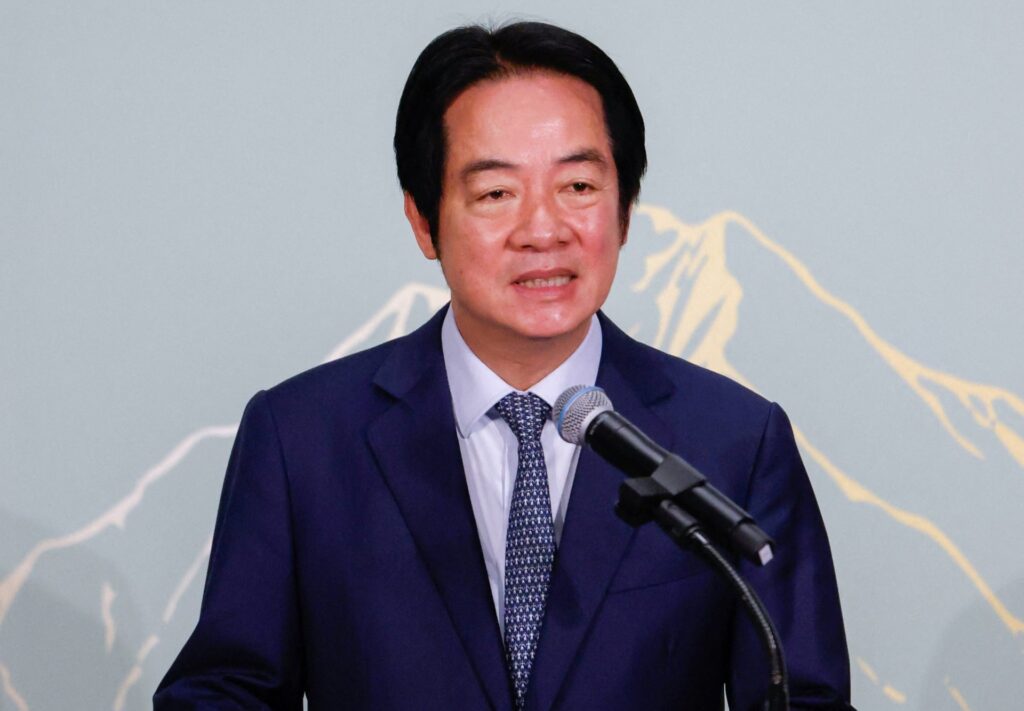
Taiwan’s President William Lai Ching-te has expressed his hope that the United States will soon approve a critical arms sale package to Taiwan. This anticipated arms deal is viewed as vital for maintaining Taiwan’s defense capabilities amid rising tensions in the region. President Lai emphasized that the swift approval of this package would reinforce Taiwan’s security and stability in the face of growing pressure from China.
In addition to the defense matter, President Lai reiterated his stance on the complex relationship between Taiwan and China, advocating for talks grounded on principles of parity and mutual respect. He stressed the importance of dialogue that treats Taiwan as an equal partner rather than a subordinate entity. This approach aims to foster peaceful coexistence and reduce the risk of conflict.
The desire for parity in talks underscores Taiwan’s insistence on being recognized as a sovereign entity capable of engaging with China on equal footing. President Lai’s comments come amid ongoing cross-strait tensions, where China asserts its claim over Taiwan, while Taiwan maintains its self-governance and democratic identity.
The US arms sale package includes advanced defense systems designed to enhance Taiwan’s ability to deter potential aggression. The sale is tied closely to Washington’s commitment under the Taiwan Relations Act to provide Taiwan with arms necessary for its self-defense.
President Lai’s call for quick approval reflects Taiwan’s urgent need to bolster its military readiness. Taiwan faces a complex security challenge, with China frequently conducting military exercises and patrols near Taiwanese waters and airspace.
International observers note that US arms sales to Taiwan have historically been a flashpoint in US-China relations. While the US views such sales as vital for regional stability and supporting Taiwan’s self-defense, China vehemently opposes them, considering Taiwan a breakaway province.
The president’s remarks highlight Taiwan’s strategic position in East Asia’s geopolitical landscape. A robust defense capability supported by US arms sales is seen as a deterrent against escalation and maintains the status quo in the region.
In his appeal, President Lai also expressed hope that talks with China, if they occur, would be conducted without coercion and with mutual recognition of each side’s dignity. This perspective points to Taiwan’s broader diplomatic effort to secure international support and recognition amidst its challenges.
Taiwan’s situation remains precarious, with the island striving to maintain its democratic values and international relationships while managing a delicate balancing act with China and the US.
The US State Department has indicated its commitment to reviewing Taiwan’s arms sale requests thoroughly, keeping in mind regional stability and bilateral relations with China.
President Lai’s statements today reinforce Taiwan’s determination to uphold its sovereignty, enhance its defense capabilities, and seek peaceful dialogue under just terms. The international community watches closely as these developments unfold, recognizing the significant implications for peace and security in the Indo-Pacific region.