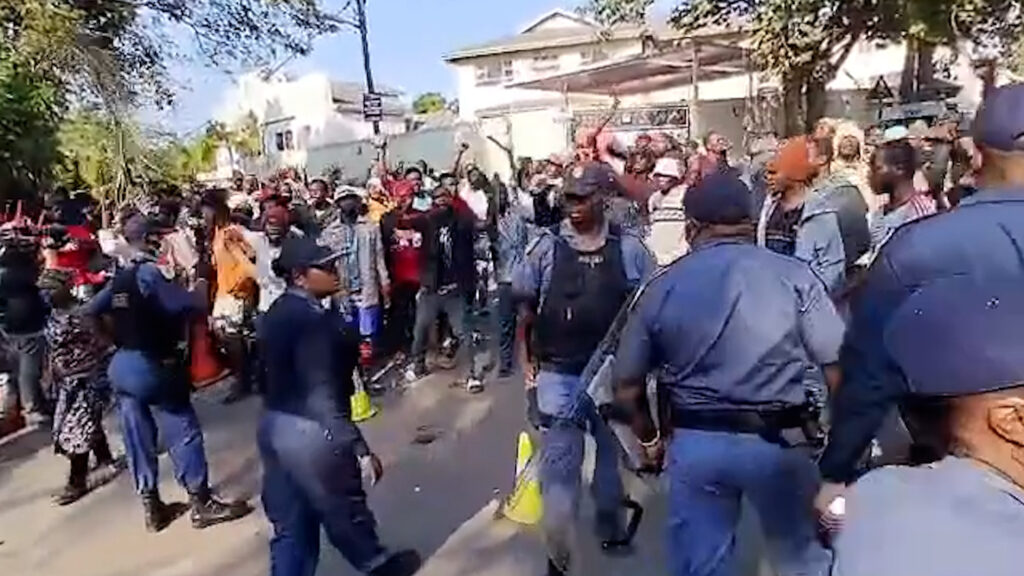
Tensions escalated in South Africa as police forces clashed with Malawian protesters demanding their deportation. The protests, which have drawn significant attention, highlight ongoing challenges faced by migrant communities in the country.
According to eyewitness reports, a large group of Malawian nationals gathered in a public area to express their discontent with their current living situation and conditions in South Africa. The protesters called for immediate action regarding their deportation back to Malawi, citing various reasons including safety concerns and lack of proper legal documentation.
The police responded with measures intended to control the situation, which unfortunately led to a confrontation. Authorities claim the protests turned violent, leading to the deployment of riot control units and use of force to disperse crowds. Several individuals were reported injured during the clash, and some arrests were made.
The context to these clashes comes amid increasing pressures on South Africa’s immigration policy and enforcement, which has been a sensitive and contentious issue across the region. Migrants from various neighboring countries have faced challenges due to xenophobic sentiments, economic hardships, and stringent immigration controls implemented by South African authorities.
This incident has sparked a broader conversation on the treatment of immigrants and refugees in South Africa. Human rights organizations have called for calm and urged both protestors and police to avoid violence and seek peaceful dialogue.
Officials from the Malawian government have reportedly been alerted about the situation, aiming to seek diplomatic solutions and assistance for their nationals abroad. Meanwhile, South African authorities have emphasized the need for maintaining law and order while addressing immigration concerns.
The clashes underscore the complex dynamics of migration within the Southern African region. Many Malawians migrate in search of better economic opportunities, but often face harsh realities including discrimination and legal obstacles.
International observers and advocacy groups are monitoring the situation closely, advocating for respectful and humane treatment of all migrants. The events have also drawn attention to the need for improved regional cooperation on migration and refugee management.
As the situation develops, officials from both countries and international bodies are expected to engage in talks to prevent further violence and find sustainable solutions. This incident serves as a reminder of the pressing need to balance national security with the rights and dignity of migrants in South Africa and beyond.