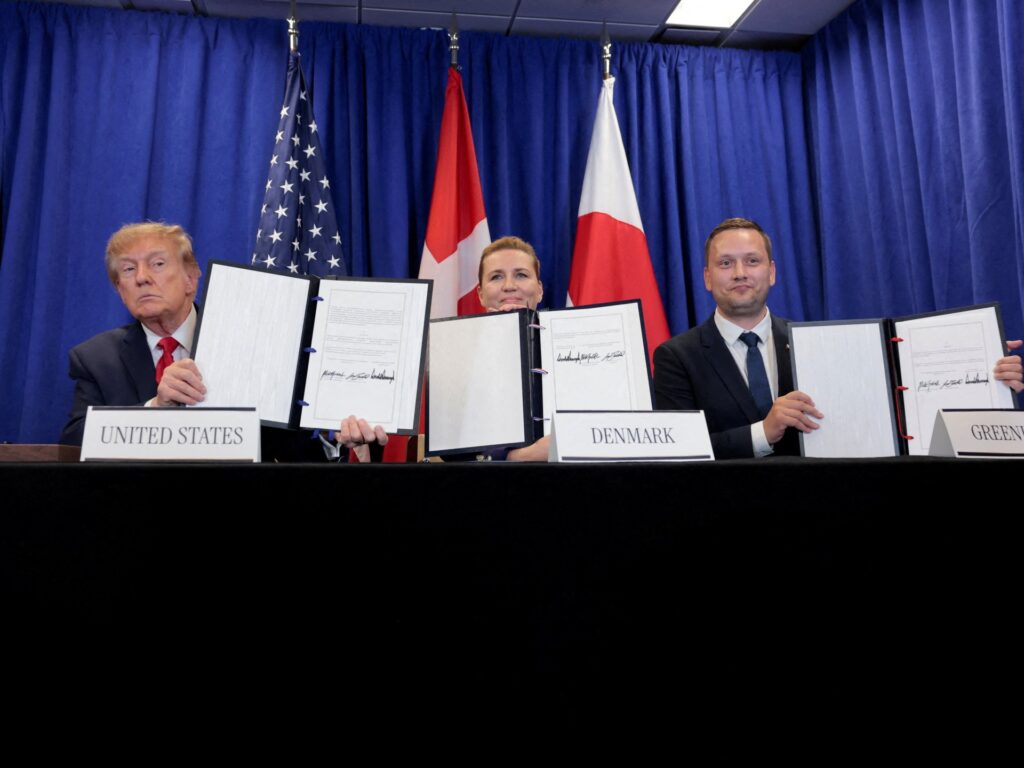
In a significant development for international security and geopolitics, the United States has signed a landmark security agreement with Denmark and Greenland that will allow an expanded US military presence in Greenland. This deal represents a strategic enhancement of US defense capabilities in the Arctic region, a zone of growing global interest.
The agreement was signed amid talks involving then-US President Donald Trump and the leaders of Denmark and Greenland. It marks a new chapter in the trilateral relations between the countries, focusing on strengthening defense cooperation and ensuring stability in the Arctic.
Greenland, an autonomous territory within the Kingdom of Denmark, occupies a critical geographic position that is increasingly important due to its proximity to the Arctic passage and its vast natural resources. The expanded US military presence is intended to bolster security arrangements and respond efficiently to emerging threats in the region.
The deal has been described by US officials as “tremendous,” emphasizing its significance for national security interests and regional cooperation. It reflects a mutual understanding of the need to guard key strategic assets and to collaborate more closely on defense matters.
Under the terms of the agreement, the US will increase its installations and operational capacity in Greenland, enhancing radar and missile defense systems, and expanding facilities at key bases. These moves are aimed at not only monitoring but also deterring potential adversaries.
Denmark and Greenland have voiced strong support for the agreement, viewing it as a way to bolster their security profiles and ensure that the Arctic remains a region of peace and stability. The expanded military presence also promises economic benefits through increased investment and infrastructure development.
Critics and some observers have raised concerns about the militarization of the Arctic and potential environmental impacts, urging careful oversight and adherence to international treaties. However, supporters argue that the move is necessary given the strategic dynamics and the increasing accessibility of the region due to melting ice.
This deal signifies a renewed US commitment to its allies in the North Atlantic and signals a proactive approach to emerging security challenges. It also demonstrates the geopolitical importance of Greenland and Denmark in broader US defense strategy.
The implications of this expanded presence extend beyond military concerns to influence economic, environmental, and diplomatic dimensions in the Arctic. As global powers watch closely, this agreement underscores the complexity and significance of the Arctic region in the 21st century.