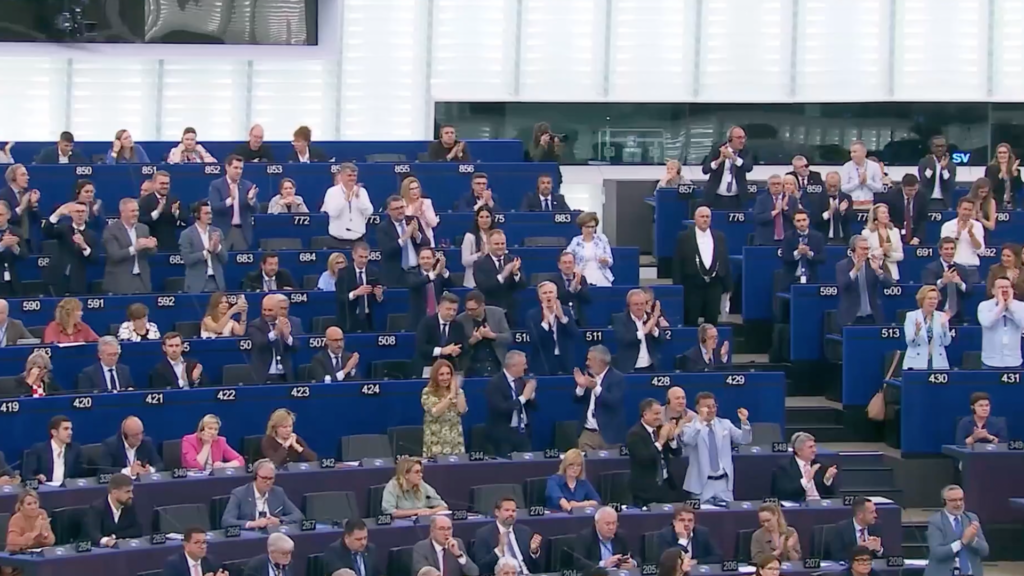
In a dramatic and tense session, the European Parliament echoed with chants of “Send them back” after the passage of a highly contentious anti-migrant bill. The legislation, which has sparked widespread debate and concern among various human rights organizations and political factions within the EU, aims to tighten controls on immigration and reduce the number of migrants allowed into the EU member states.
The bill’s passage marks a significant moment in the EU’s ongoing struggle to balance national security concerns, economic pressures, and humanitarian obligations. Proponents argue that the new measures are necessary to combat illegal immigration and protect the integrity of the Union’s borders. They emphasize the importance of legal migration channels and stronger enforcement mechanisms to deter unauthorized entries.
Critics of the bill, however, have lambasted the legislation as overly harsh, discriminatory, and counterproductive. They warn that such policies risk undermining the EU’s long-standing commitments to human rights and international asylum laws. Several members of the Parliament expressed deep frustration and disappointment, pointing out that the chants and atmosphere reflected a growing polarization and intolerance in the political discourse.
The bill includes provisions for expedited deportations, enhanced border security funding, and stricter criteria for asylum applications. Supporters believe these steps will reduce illegal crossings and ensure that migrants who do not qualify for asylum are sent back swiftly and safely. They argue that the measures will alleviate the strain on social services and contribute to social cohesion within EU countries.
Opponents have raised alarms about the bill’s impact on vulnerable migrant populations, including refugees fleeing conflict zones and those seeking protection from persecution. They contend that expedited deportations could lead to violations of due process and endanger lives. Advocacy groups have pledged to challenge the bill through legal channels and international forums, emphasizing the need for compassionate and comprehensive approaches to migration.
The chanting incident occurred immediately after the announcement of the bill’s passage, reflecting the charged political environment surrounding the migration issue in Europe. Lawmakers and observers alike noted the unprecedented nature of such public displays within the Parliament chamber, underlining the deep divisions this issue evokes.
This development comes amid a broader context of increasing migration flows to the EU, driven by conflicts, economic disparities, and climate change effects. Member states have struggled to formulate a unified approach, with divergent national interests complicating efforts for comprehensive reform.
Going forward, the EU will be closely watched by international communities and domestic constituents. The implementation of the new rules will test the Union’s ability to manage migration effectively while upholding its core values of respect, dignity, and international cooperation.
Human rights organizations have called for increased dialogue and cooperation to address root causes of migration and promote solutions that are sustainable and just. The recent events in the Parliament highlight the urgent need for balanced policies that reconcile security concerns with humanitarian imperatives.
As the EU navigates this critical juncture, the coming months will reveal how these legislative changes affect migrants, member states, and the broader geopolitical landscape. The passionate responses in the Parliament chamber serve as a stark reminder of the complexities and sensitivities involved in migration policy debates across the continent.