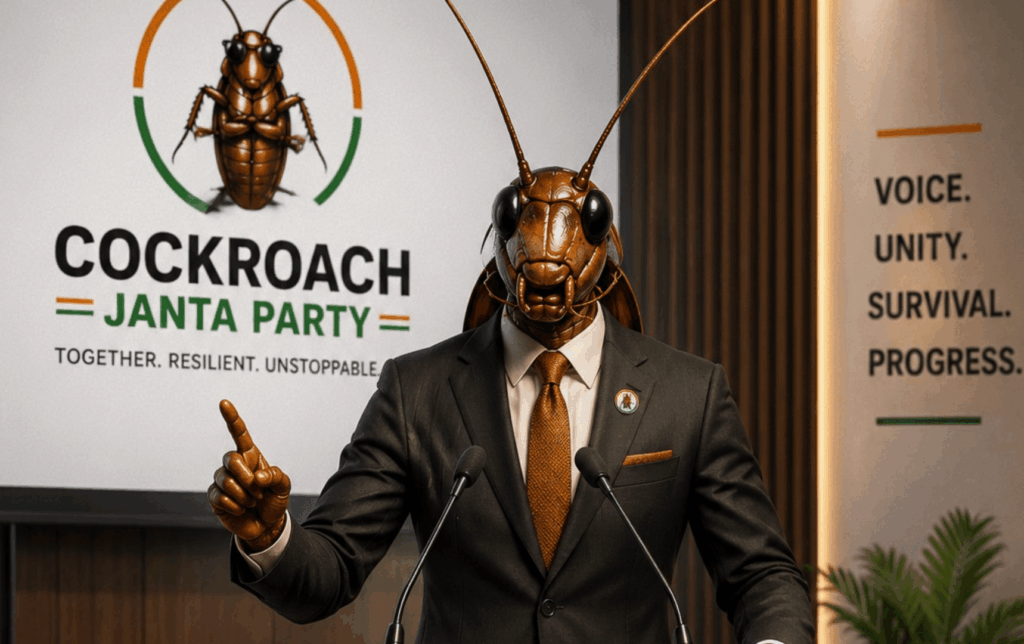
The founder of the Cockroach Janta Party has raised serious concerns regarding the recent takedown of the group’s website, alleging that the Indian government was behind the move. The political movement’s online presence has faced significant disruptions, including the hacking of its official Instagram page as well as the personal Instagram account of the group’s creator.
According to the founder, the website was forcibly shut down, curbing the movement’s ability to communicate with its followers and the general public. This action has sparked a debate on freedom of expression and governmental censorship in India, particularly among emerging political parties and activist groups.
The Cockroach Janta Party, known for its unconventional approach and grassroots popularity, has been vocal against various government policies. The founder claims that the hacking incidents on their social media accounts were coordinated attempts to silence their voice and diminish their outreach capabilities.
Cybersecurity experts have noted that social media accounts linked to political groups are often targeted during sensitive times, but the targeted breach of both the party’s and the founder’s personal accounts suggests a deliberate effort to disrupt their communication channels.
Supporters of the movement have expressed outrage over what they perceive as an infringement on democratic rights. They argue that political dissent should be protected, not suppressed, and are calling for thorough investigations into the alleged government involvement in both the website shutdown and the social media hacks.
While the Indian government has not officially commented on the allegations, digital rights advocates emphasize the need for transparency and accountability. They highlight the growing concerns around digital surveillance, censorship, and control over online political discourse within the country.
The incident underscores the challenges faced by new political entities in establishing a presence in the digital era, where websites and social media platforms are critical for engagement and mobilization. The founder of the Cockroach Janta Party has vowed to restore the party’s digital platforms and continue their activism, despite the setbacks.
This controversy has attracted attention both domestically and internationally, raising questions about the balance between national security, political stability, and freedom of expression in India. Civil society organizations are calling for stronger protections for digital rights and political freedoms.
In summary, the Cockroach Janta Party’s founder’s accusations of government interference in taking down their website and hacking social media accounts mark a significant episode in the ongoing discourse concerning digital rights in India. The situation remains fluid, with increased scrutiny expected as further details emerge.