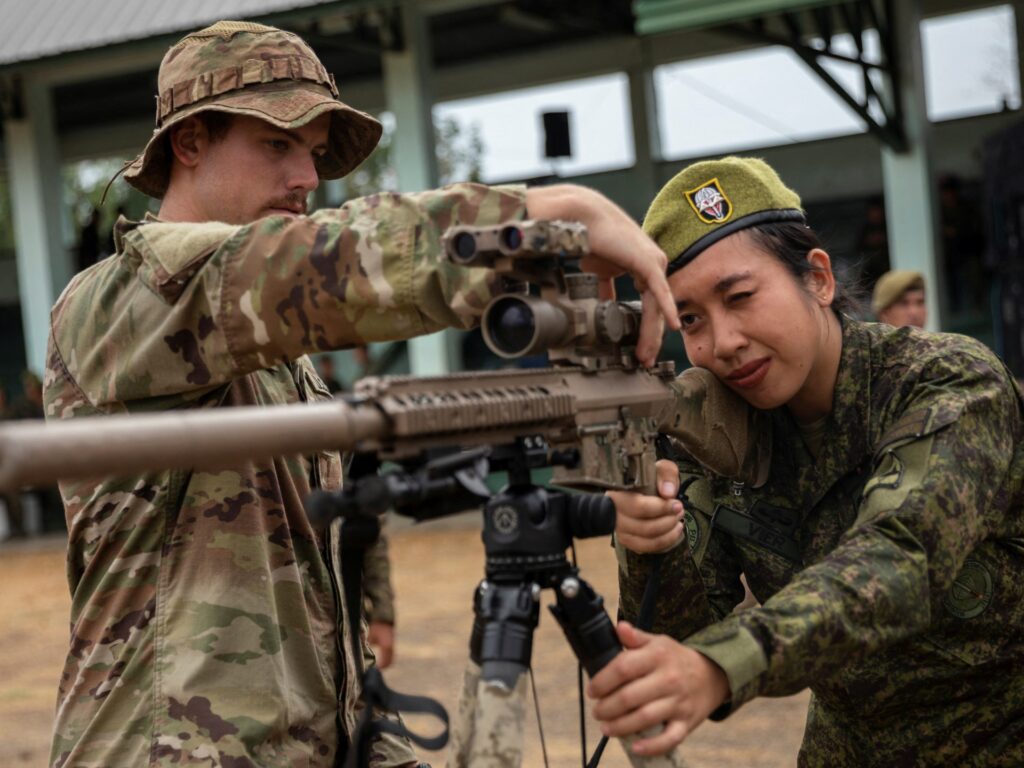
As geopolitical tensions in the Asia-Pacific region escalate, the ongoing military exercises between the United States and the Philippines have sparked growing concerns among critics and local populations. These joint war games, designed to strengthen military cooperation and readiness, are being viewed by some as a double-edged sword that could potentially increase the risk of conflict reaching Philippine soil.
The US-Philippines alliance, rooted in long-standing historical and strategic ties, has been bolstered through a series of bilateral military drills aimed at enhancing interoperability and deterrence against regional threats. However, these exercises have drawn criticism from various sectors within the Philippines and international observers who argue that such close military alignment with Washington may inadvertently draw Manila into broader geopolitical confrontations.
Critics caution that by positioning the Philippines as a key strategic partner in American military operations, Manila could become a possible target in any conflict involving the United States. This concern resonates deeply amid the backdrop of renewed great power rivalries in the region, particularly involving China’s assertive posture in the South China Sea.
The war games often involve simulated combat scenarios, amphibious assaults, and maritime patrols, which serve to sharpen joint response capabilities. Yet for many local communities living near the exercise sites, there is an increasing unease about the implications of hosting extensive foreign military activities on their territory.
Opponents of the drills point to the risk of escalation, potential accidents, and the broader strategic ramifications of entangling the Philippines more closely in US defense policies. They argue that while military readiness is crucial, the approach should prioritize diplomatic engagement and conflict de-escalation to safeguard national security and sovereignty.
Proponents, on the other hand, emphasize the benefits of enhanced defense cooperation, including access to modern military technology, increased training opportunities for Philippine forces, and a stronger deterrent posture against external threats. They contend that these measures contribute to regional stability and uphold the principles of mutual defense agreements.
The Philippine government maintains that the joint exercises are purely defensive in nature and aim to strengthen preparedness against conventional and non-conventional threats such as terrorism and natural disasters. Officials assert that the partnership with the United States is a sovereign decision that balances national interests with regional security dynamics.
Meanwhile, neighboring countries and international observers watch closely as these military collaborations evolve. The exercises send strategic signals but also raise questions about the possibility of unintended consequences that could exacerbate regional tensions or embroil the Philippines in larger conflicts.
In sum, the intensification of US-Philippines war games highlights the delicate balance between deterrence and diplomatic caution. While the drills underscore robust military ties, they also bring to the fore critical debates about sovereignty, security, and the risks inherent in great power alignments in a volatile region. The future trajectory of these military cooperations will likely play a significant role in shaping the Philippines’ security environment and its position on the global stage.