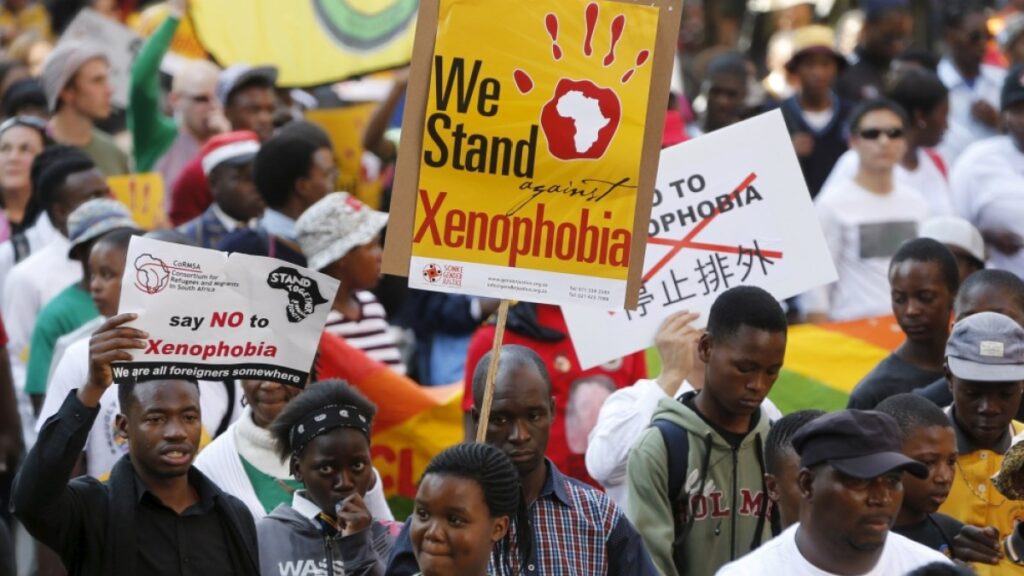
South Africa has been witnessing a worrying surge in anti-migrant attacks, fueled by increasing xenophobia that has severe implications for migrants’ safety and livelihoods. Over recent years, the country has experienced a rise in violent incidents directed against foreign nationals, who face harassment, discrimination, job losses, and community-driven violence.
Several factors contribute to this escalating situation. Economic pressures, including unemployment and competition for scarce resources, are significant drivers. Many South Africans perceive migrants as competitors for jobs and social services, leading to resentment and hostility.
Political dynamics also play a role. Some politicians have exploited xenophobic sentiments to gain support, framing migrants as scapegoats for the country’s socio-economic problems. This rhetoric exacerbates negative attitudes and incites violence.
Social and cultural tensions add to the complex landscape. Migrants often live in densely populated townships with limited access to services, creating friction with local communities already struggling with poverty and inequality.
The consequences for migrants are dire. Beyond immediate physical violence, they encounter daily discrimination that impedes access to education, healthcare, and employment opportunities. This hostile environment forces many to live in constant fear and uncertainty.
Efforts by civil society, human rights organizations, and some government agencies aim to curb xenophobia and promote social cohesion. However, addressing the root causes, particularly economic disparities and political manipulation, remains critical.
The international community continues to monitor the situation, urging South Africa to strengthen protection measures for migrants and foster an inclusive society where all residents can coexist peacefully.
In conclusion, the increase in anti-migrant attacks in South Africa is rooted in economic hardship, political opportunism, and social tensions. Comprehensive strategies focusing on economic development, education, and community engagement are essential to combating xenophobia and ensuring safety and dignity for all.