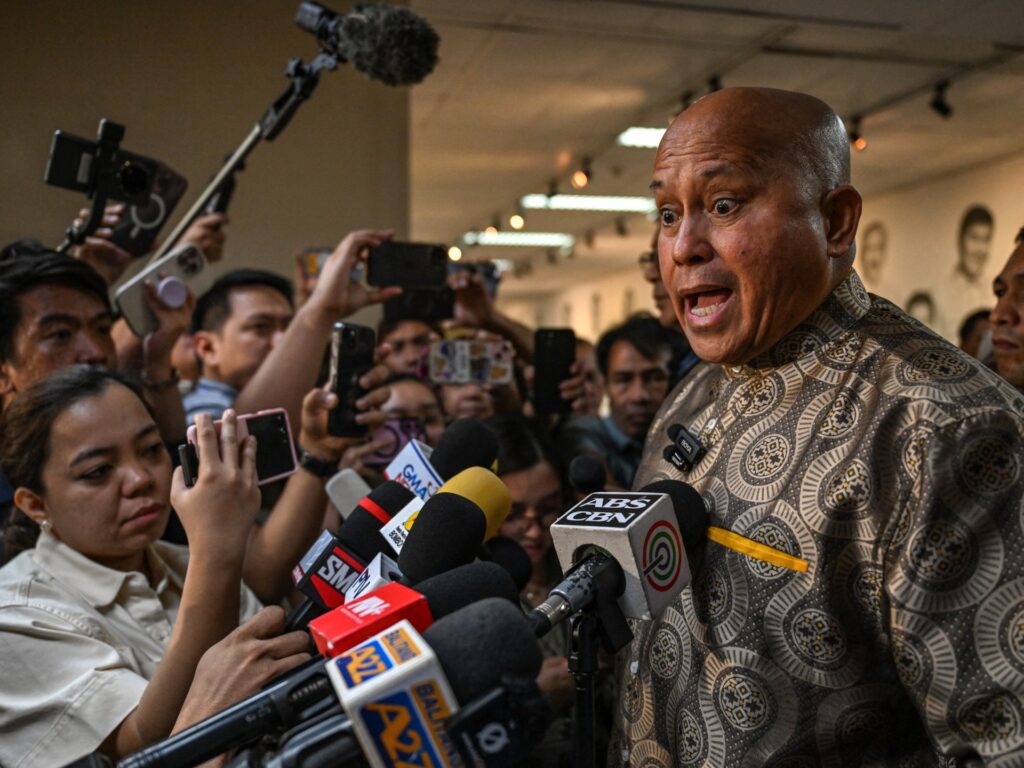
In a dramatic turn of events, Senator Ronald ‘Bato’ dela Rosa, a prominent Philippine politician wanted by the International Criminal Court (ICC), has fled the Senate building after initially taking refuge there. The Senate president confirmed that dela Rosa is ‘no longer in the building,’ marking a significant development in the ongoing political saga.
Ronald dela Rosa, a former police chief known for his staunch leadership and controversial tenure during the Philippines’ war on drugs, has been under scrutiny by the ICC. The court issued charges related to alleged human rights abuses, leading to heightened political tensions within the country.
Despite the looming international charges, dela Rosa was serving as a senator, a position that provided him a platform to challenge the accusations and assert his innocence. However, following increased pressure and security developments, he sought temporary refuge within the Senate premises.
The Senate president’s statement that dela Rosa has fled the building indicates rising uncertainties and potential shifts in political alliances and protections. The motive behind his sudden departure remains speculative, with analysts pointing to possible attempts to evade impending legal actions or to regroup with supporters outside the controlled environment of the Senate.
This incident has sparked widespread discussions about the rule of law, political accountability, and the effectiveness of international judicial mechanisms concerning national leaders. The Philippine government’s stance on cooperating with the ICC remains cautious, balancing international obligations and domestic political sensitivities.
Dela Rosa’s flight from the Senate underscores the complexities faced by political figures in countries where local support and international law sometimes collide. It also highlights the challenges faced by international courts in enforcing mandates against sitting politicians with significant domestic influence.
Human rights advocates have expressed disappointment and concern over dela Rosa’s actions, calling for strict adherence to justice and accountability. Meanwhile, supporters of the senator argue that he is being politically targeted and demand the safeguarding of national sovereignty.
As the situation unfolds, global observers are closely monitoring the Philippine political landscape, recognizing that the case symbolizes broader issues of governance, justice, and international law enforcement.
The next steps for Senator Ronald dela Rosa remain uncertain, with speculation about potential legal proceedings, political negotiations, or further attempts at evasion. The Senate itself is expected to address the breach of protocol and security related to this incident.
In conclusion, this episode is a critical juncture for the Philippines, illustrating the tensions between national politics and international legal accountability. The departure of a Senate member wanted by the ICC from a legislative refuge encapsulates the ongoing conflicts and challenges in upholding justice and political stability.