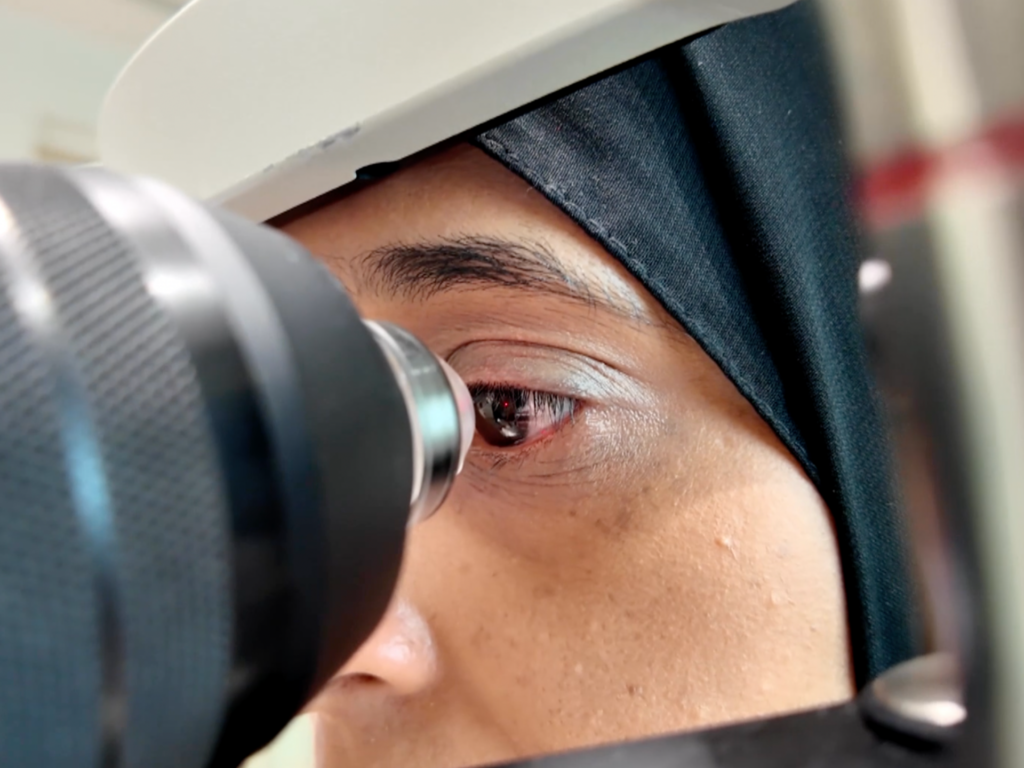
A groundbreaking advancement in medical technology has been introduced by a Qatar-based professor who has developed a revolutionary non-invasive eye scan capable of detecting neurodegenerative diseases years before symptoms become evident. This innovative eye scan technology promises to transform the early diagnosis and management of devastating conditions such as Alzheimer’s, Parkinson’s, and other related neurodegenerative disorders.
The newly developed eye scan takes only minutes to perform and offers a painless, risk-free alternative to traditional diagnostic procedures. It works by analyzing the intricate structures and subtle changes within the retina and other eye components, which are closely linked to the brain and nervous system. Because the eye is considered a window to the brain, many neurodegenerative changes manifest early in the eye before progressing symptoms are observed clinically.
The professor’s pioneering work involved extensive research into the biomarkers present in ocular tissues that correlate strongly with neurodegenerative disease progression. This correlation allows the eye scan technology to detect abnormalities at a microscopic level, providing clinicians with critical early warning signs. Early detection is vital as it opens the door to interventions that can slow disease progression, improve quality of life, and enable more precise treatment regimens.
Currently, neurodegenerative diseases are often diagnosed after notable cognitive or motor decline, by which time significant brain damage has occurred. Traditional diagnostic tools can be invasive, costly, and time-consuming, posing challenges to widespread screening especially in at-risk populations. This new eye scan technology mitigates these issues by offering a quick, affordable, and easy-to-use screening tool potentially usable in routine health checkups.
Initial clinical trials conducted in Qatar and collaborating international centers have demonstrated high accuracy and reliability of the eye scan in detecting early-stage disease markers. The trials also suggest that this method could be valuable in monitoring disease progression and response to treatments.
The implementation of this eye scan technology could revolutionize preventative neurology, helping to identify individuals at risk long before symptoms appear. This could lead to personalized care plans and targeted therapies, substantially reducing the societal and economic burden of neurodegenerative diseases.
In addition to clinical applications, the technology may stimulate further research into the connections between ocular health and neurodegenerative processes, paving the way for new insights into disease mechanisms.
The development of this eye scan is a testament to Qatar’s commitment to advancing medical science through innovation. It highlights the potential of cross-disciplinary research—combining ophthalmology, neurology, and technology—to develop solutions that address unmet medical needs.
Looking ahead, efforts are underway to make the technology widely accessible globally. Partnerships with healthcare providers and governmental health organizations are planned to integrate the eye scan into regular screening programs, especially targeting populations with higher genetic or environmental risk factors.
In summary, the introduction of this non-invasive eye scan marks a significant leap forward in the early detection of neurodegenerative diseases. By identifying disease markers years before symptoms arise, it offers hope for earlier intervention, improved patient outcomes, and a reduction in the overall impact of these debilitating disorders worldwide.