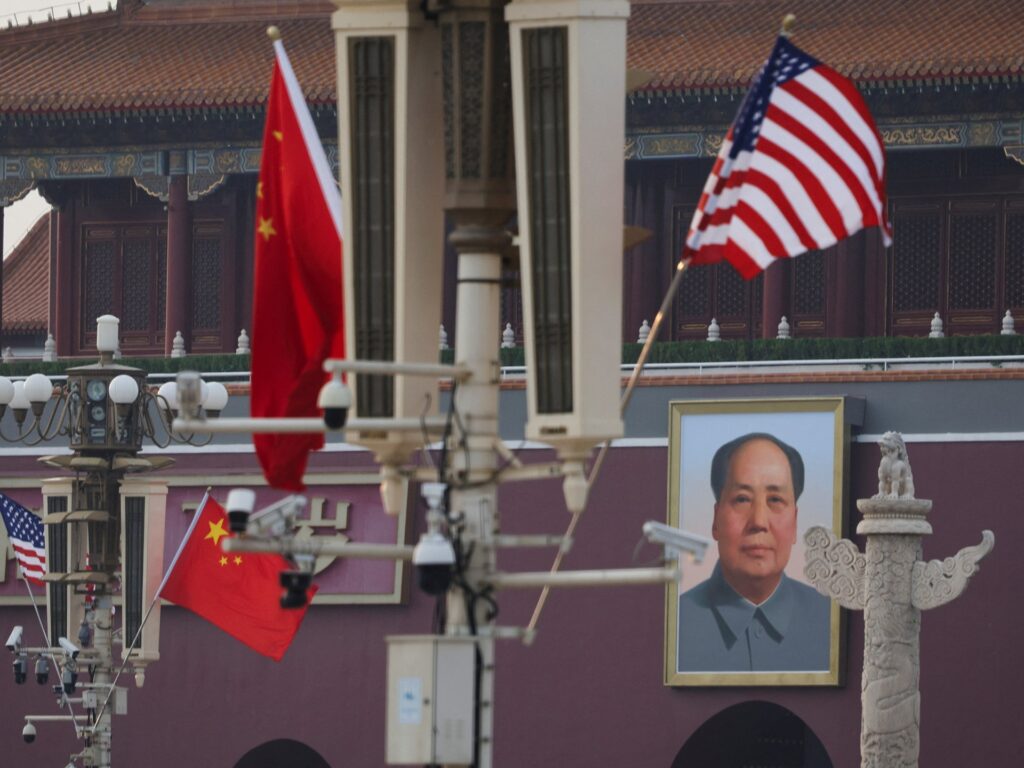
During a highly anticipated summit between former US President Donald Trump and Chinese President Xi Jinping, new insights have emerged suggesting that China’s potential involvement in easing tensions with Iran could come with significant diplomatic strings attached. Analysts increasingly believe that Beijing may leverage its influence over Tehran, particularly regarding the reopening of the strategic Strait of Hormuz, demanding that the United States reconsider its stance on Taiwan.
The Strait of Hormuz, a crucial waterway for global oil shipments, has frequently been at the center of geopolitical tensions, especially in relation to Iran’s activities and regional influence. China’s growing partnership with Iran offers a pathway for stabilizing the region, but this could come at the cost of broader US-China relations.
Experts speculate that China’s willingness to mediate or pressure Iran on the Hormuz matter is not purely humanitarian or regional but part of a larger strategic play. One of the key issues likely to surface is Taiwan, a territory Beijing regards as a renegade province. The US currently supports Taiwan through arms sales and diplomatic engagements, which China views as interference.
If China puts its weight behind reopening the Strait of Hormuz by influencing Iran to reduce regional hostilities, it may concurrently seek changes in US policy concerning Taiwan. This could include demands to lessen or cease US military support to Taiwan or to acknowledge China’s sovereignty over the island in more explicit terms.
Such a diplomatic trade-off would represent a significant shift in US foreign policy, possibly impacting the balance of power in the Indo-Pacific region and US commitments to allies. It raises questions about how far the US is willing to compromise on core strategic principles to secure stability in the Middle East.
The Trump-Xi summit thus becomes a critical juncture, not just for US-China relations but for the wider geopolitical landscape involving East Asia and the Middle East. The outcome could redefine alliances and influence the global approach to contentious issues such as the Taiwan Strait and the Persian Gulf.
Ultimately, the potential linkage between China’s role in Iran and US concessions on Taiwan showcases the complex interplay of global politics, where regional conflicts are interconnected with broader international strategies. Observers will be closely watching the summit talks for indications of any shifts in US policy and the ensuing ramifications across the globe.